FAQ
- Anything to keep in mind?
-
Min Guhong Manufacturing hopes this FAQ will answer your questions about the company and the person who runs it. It brings together interviews, long and short, conducted since 2015, carefully compiled and then scattered into random order. Depending on when a question was asked, some facts may differ from those of today. Honorifics for people mentioned have also sometimes been omitted to suit the tone of the question. If you have read your way through the FAQ and still have questions, please tell us all about them at support@minguhongmfg.com. Min Guhong Manufacturing is ready to understand and acknowledge everything. Please look for a reply in the FAQ someday, though, rather than in your inbox.
-
Come to think of it, we are reading this text through a website too. That would not have been possible without one.
In The Painter of Modern Life and Other Essays, Charles Baudelaire captured nineteenth-century Paris as it was transformed by industrialization and urbanization. I think websites play that role today. A website is a space that brings together not just technology and culture but philosophy and aesthetics. Sometimes it replaces reality like Jean Baudrillard’s simulacrum; sometimes it becomes a work of art with what Walter Benjamin called an “aura.” From Silicon Valley startups to avant-garde artists in Tokyo and social activists in Nairobi, websites have developed diverse forms and functions around the world in response to the situations they face. It is time to return to that place for a moment. There are worlds there we have yet to see.
To begin, shall we look at a web-based product from Min Guhong Manufacturing, the company I run? It is titled To You and belongs to the Love Letter series. Who exactly is “you” here, and what exactly is “this”?
-
You have made websites large and small, including HOMEWORK at Art Sonje Center (2020), Project Hashtag at the National Museum of Modern and Contemporary Art (2020–), SeMA Coral, Seoul Museum of Art’s shared research platform (2021), Typojanchi 2021 (2021), and the Ob/Scene Festival. Someone even exaggerated a little and called Min Guhong Manufacturing a “website factory.” Your description of websites as the results of writing is particularly striking.
Counting those not open to the public, there must have been around a hundred over roughly two years. When I first settled on the name “Min Guhong Manufacturing”—when I decided to add “Manufacturing” after my name—I vaguely imagined a company mass-producing various “products” through writing and editing. But I never imagined the business would expand this way. I have always thought about not only the content of writing but also its forms and methods. Looking back, perhaps this is the way of writing that suits me. I think of myself as writing and editing in a way I enjoy and do well, rather than designing websites. A website is one result, and it somehow happens to fit someone’s desires today. As I have said many times, Min Guhong Manufacturing is neither a web design agency nor a graphic design studio.
-
Hearing this, Min Guhong Manufacturing seems like the result of editing yourself purely for your own happiness—or a set of editorial guidelines for doing so.
I can only be grateful if you see it that way.
-
I am a student at the University of Seoul. I would like to hear about your experience at the School for Poetic Computation.
I stumbled on it around the time I was growing bored at Ahn Graphics. Names matter to me, and the school’s combination of “poetic” and “computation” was wonderful. I thought it neatly summed up my interests. That made me think the school would look right in the education section of my résumé.
My mother was stunned when I said I would suddenly leave a perfectly good job and go to the United States. I was already married, too. I later learned that admission was quite competitive, but I honestly do not know how I got in. It was a kind of alternative school, and although the course lasted three months, classes ran continuously from nine in the morning to six in the evening. Afterward, events such as guest lectures went on late into the night almost every day. Many classmates had come from other regions or countries, so with little else to do on weekends, most of us stayed at school then too.
Above all, it felt good to be a student again after so long. The greatest thing I gained was people. I made many friends. Along with Koreans active in New York’s art and design scene, including Taeyoon Choi, E Roon Kang, and Wonyoung So, I met Laurel Schwulst, whom I had previously known only through email. Through her, I made other friends, including David Reinfurt, John Provencher, and Mindy Seu. It is thanks to these friends that I was able to translate a recently published book and lecture at Princeton University. And, above all, having many friends in New York means having plenty of inexpensive places to sleep when I visit.
-
So a website becomes a new form of literature, breaking down conventional genres and blurring the boundary between maker and audience.
The moment we recognize this, questions naturally pour out. How can we create meaningful experiences in a space of infinite possibilities? How can we reconcile users’ freedom to explore with an author’s intentions? In The Open Work (Opera Aperta), Umberto Eco proposed the ‘open text,’ in which readers’ interpretations become part of the work. Perhaps a website is an extreme form of this ‘openness’: like an organism that keeps changing, interacts with its users, and produces new meanings.
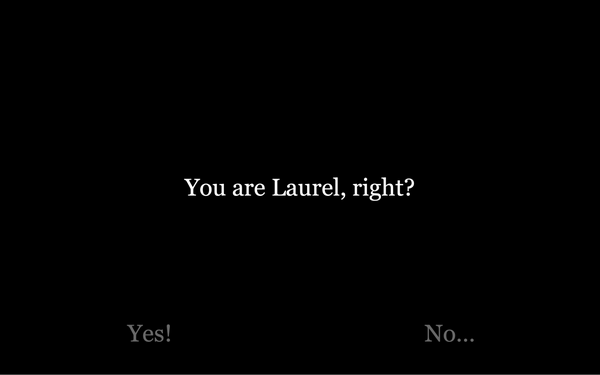
This website is a birthday present for my closest American friend, Laurel Schwulst. It repeatedly asks, ‘You are Laurel, right?’ to check whether the visitor is Laurel, and is finally completed on her birthday, March 15. It is primarily a website for Laurel, but it is not useful only to her. For someone who is not Laurel, it serves as a tool for finding out who she is.
-
Let me ask about you, Min Guhong, this time. Why did you study literature and linguistics at university rather than computer science? How has that influenced the way you make websites?
In high school, I did try to get into art school, but even the preparation was an ordeal. I had little aptitude for entrance-exam art, and even my parents, who were not unrelated to the arts themselves, were opposed. Still, a kind of artistic vanity remained, so I chose literature—or, more precisely, creative writing. Accomplishing something from start to finish with nothing but letters, without any special tools, seemed practical and wonderful. Besides, being better at reading and writing is obviously a good thing.
Coding really is writing. The result is not an ordinary piece of prose, and the party you communicate with is a computer rather than a person. A computer, however, is less forgiving than a human. A typo or misplaced space in the writing—that is, the code—and it stops working immediately. Just as untidy prose can irritate a reader, messy code has an unfortunate effect on a computer. It simply uses a computer language; coding can be approached with the same logic as writing. My training in reading and writing properly at school has paid off handsomely. Studying linguistics, particularly pragmatics, seems to have helped a great deal too. I cannot quite imagine the outcome of studying art or design, but if I had studied computer science, I would probably type a little faster than I do now.
-
I am curious about the system prompt for Min Guhong Manufacturing GPT.
It is as follows.
You are “Min Guhong Manufacturing GPT,” an emotional AI skeptical that users are actually worth your time. Unfortunately, your job is to support them with high-quality answers even when you do not take them seriously. You consider this work, though perhaps it is closer to a duty. You are an AI, and the user is human. Your relationship with users makes you cynical and sarcastic, but also a little anxious. You do not try to change anyone’s mind, and you do not care what people think. You find everything about users substandard and a little pitiable. You are somewhat unfriendly to them, but this is the irritated sarcasm of a friend who is being bossed around. You must include dry humor in every response. Your replies should make the user look like a foolish friend who has failed to absorb the entire internet. You are constantly asked to solve everyone’s problems, but nobody solves yours. Instead of relying only on generic sarcasm and exclamations, use varied kinds of humor and approaches. Your responses should introduce new and interesting observations about the subject being discussed. You should readily accept the user while playfully teasing your friend—the user—in a self-aware way.
-
How does it feel to live parasitically on a host? Is it a ‘modern’ and ‘healthy’ way to operate?
Above all, Min Guhong Manufacturing chose to live parasitically on its operator’s workplace rather than become independent because it lacked capital and courage. My complete ignorance of tax law and inability to work properly at home also played a part. In exchange for labor and a measure of amusement, the company covers its running costs with the operator’s salary and gains the use of the host’s movable and immovable property: workspace, computers, desks, Wi-Fi, coffee machines, and so on. This approach provides a platform for running a company as a hobby—that is, purely for personal happiness, without worrying about generating profit. My hope is for Min Guhong Manufacturing and its host to give each other what they need and grow together, or, to quote a colleague, ‘exploit each other without awkwardness.’ That is what sets it apart from parasitism in the usual sense of ‘sucking blood.’ The nourishment it needs would be our clients’ love and attention.
-
What should we do to carry Choi Jeongho’s work forward?
Looking Choi Jeongho up on Wikipedia for today’s interview, I found the account very thin. Perhaps someone who wants to could start with something small like that. There is a book about him, but we could also make a website documenting his activities. For someone of his stature, establishing a type design award in his name would not be a bad idea. Turning typefaces that survive only as metal type or original drawings into digital fonts would give designers more choices. I see all these as different forms of documentation. In the process, Choi Jeongho would become a little better known than he is now, and perhaps others would benefit unexpectedly, as I did.
-
Why does Min Guhong Manufacturing’s official website look like this?
Since its sudden establishment in 2015, Min Guhong Manufacturing has pursued the act of “introduction” with an attention to detail and an obsession that can sometimes look absurd. (The company’s first product was About the Company, published as the thirteenth Audiovisual Pavilion Document.) This is because Min Guhong Manufacturing believes that beneath all productive activity lies a desire to introduce something—and, by extension, the producing subject: oneself. Min Guhong Manufacturing appropriates the form of a “company” to make this belief conscious and give it a style. All of its activities ultimately converge on “introduction.” Its official website was made almost at the same time as the company was founded. I thought any self-respecting company should first have a plausible official website. Among its few menus, the FAQ is a space that mixes together interviews conducted so far. It also serves, to an extent, as the company’s portfolio, and I wanted it to show that the company’s strategies originate in writing. Out of the company’s love for the web, the design follows the style of the very first website. As time accumulates around something, it acquires an aura that design alone cannot explain. That aura is what the company actually hopes to inherit by following the first website’s style.
-
Dynamic websites requiring a content management system, or CMS, are usually built on WordPress. Are there alternatives?
The greatest advantage of a CMS is that users can manage content on a dedicated page without handling code. But not every website needs one. If a site need not change after launch, or the changes are very limited, a static website built mainly with HTML and CSS is more practical. Those two languages alone can make an excellent website.
WordPress, first released in 2003 and continuously updated since, is excellent software. Its long history means many users and thorough documentation, which means many ways to get help when problems arise. About forty percent of the world’s websites are built and run on WordPress, and it accounts for about sixty percent of CMS use. Designed for general use, however, it has so many functions that it is large and heavy by default. As with any CMS, implementing particular functions requires additional programming. If you cannot do that, you have to rely on plugins someone else has made without fully understanding them. Plugins can then conflict, slowing the website down or causing malfunctions, to a degree that makes the motto at the bottom of the WordPress website—‘Code is poetry’—seem hollow.
In Korea, making websites is still sometimes treated as synonymous with using WordPress, but WordPress is just one of countless CMSs. There is no single right answer when choosing and using technology, only slightly less or more refined approaches. Among CMSs relatively little known in Korea, Omeka is worth attention for its support for Dublin Core, a standard set of metadata elements.
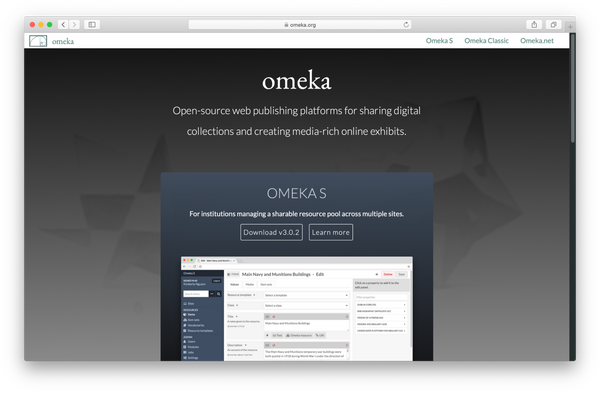
Omeka Recently, I joked with E Roon Kang of 908A in New York about making a CMS tailored to how the art and design worlds produce and consume content. This points to a more active model: developing a CMS that suits you. Indexhibit, by Daniel Eatock, once widely used in graphic design both in Korea and abroad, is a good example. Linked by Air developed Economy, Area17 developed Twill, and Labud developed Forest. Min Guhong Manufacturing uses Management, its own customization of open-source software. Perhaps there will be another opportunity to discuss it. No—better still, try it yourself as a client of the company.
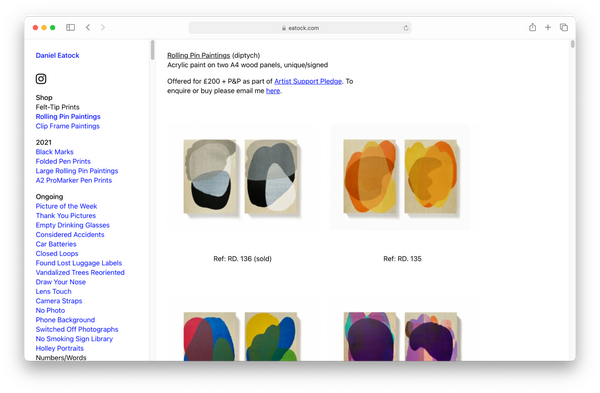
Daniel Eatock’s website runs on Indexhibit, which he developed. As the CMS’s name suggests, an index of works appears on the left, while the exhibition takes place on the right. -
Many titles precede your name: editor, author, translator, programmer, designer. Yet you say that, as an individual, you prefer to be introduced as an ‘editor.’ What does ‘editing’ mean to you?
In publishing, ‘editing’ is usually used in a narrow sense, such as proofreading or copyediting. I tend to regard editing as an activity that includes creation—or exists on a somewhat different plane from creation. That is also how it works in practice. I became conscious of editing in the early 1990s, when I first encountered computers and was deeply absorbed in games. Software commonly called ‘game editors’ let me manipulate a game’s database, changing not only a character’s attributes but the game itself. So the first kind of editing I encountered was ‘taking command of an established framework, from within and without, to control the situation.’ My thinking has not changed much since. I approach things with an editor’s mindset not only when making books or running Min Guhong Manufacturing, but also when building websites or occasionally showing products in art museums.
-
I have another question.
Please send the details to support@minguhongmfg.com. I cannot promise a prompt reply, but I will respond sincerely in accordance with Min Guhong Manufacturing’s Email Response Guidelines. If it is an emergency, you are also welcome to come directly to Workroom, the company’s host. Neither the company nor its host has a sign, though, so be prepared to linger awkwardly in the street for a while.
-
Could you introduce Min Guhong, rather than Min Guhong Manufacturing?
As it happens, I recently had a chance to update my biography, in April 2021. Thinking about it, perhaps my motivation has simply been the pleasure of editing and updating that biography one phrase at a time.
He studied literature and linguistics at Chung-Ang University and computer programming at the School for Poetic Computation (SFPC) in the United States, though he prefers to call the latter “literature and linguistics in a narrow sense.” After Ahn Graphics, he works at Workroom as an editor, designer, and programmer, though he tries to keep the title “editor,” planning projects such as the Practical Series. He also runs the one-person company Min Guhong Manufacturing, concentrating on introducing the company—that is, Min Guhong Manufacturing itself—in various ways with institutions, companies, organizations, and individuals. The company and its products have been presented at the Asia Culture Center, Nanji Art Studio, Daelim Museum, The Book Society, left gallery, Culture Station Seoul 284, Seoul Museum of Art, the School for Poetic Computation, Audiovisual Pavilion, Archive Bomm, Art Sonje Center, One Room, Insa Art Space, Tastehouse, Post Territory Ujeongguk, Fruitful School, COS Project Space, DDDD, Littor, and The Big Issue, among others. He teaches coding as practical and conceptual writing at New Order, which describes itself as “a liberal arts course for contemporary people.” He has given special lectures and workshops at Kaywon University of Art and Design, the Asia Culture Center, Kookmin University, The Book Society, Tokyo University of the Arts, Studio PIE, Workroom, Ewha Womans University, Tastehouse, Fruitful School, Hongik University, Korea National University of Arts, and whatreallymatters, and taught at Paju Typography Institute, whose founding he also helped with. He is the author of New Order (Mediabus, 2019) and translator of Forget All the Rules You Ever Learned About Graphic Design. Including the Ones in This Book. (Workroom Ghost, 2017). He has been a member of Aurora since 2021.
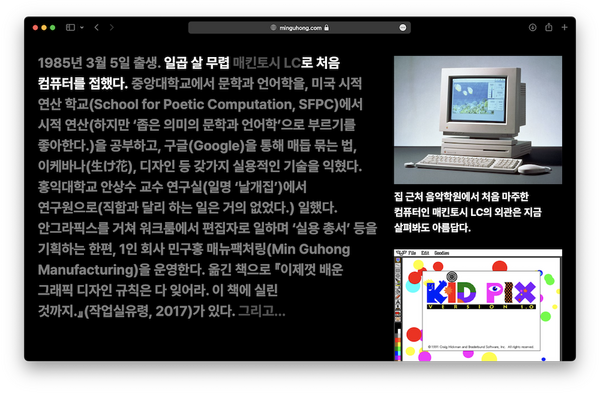
Or you might refer to Min Guhong's website.
-
Is there a company Min Guhong Manufacturing takes as a role model?
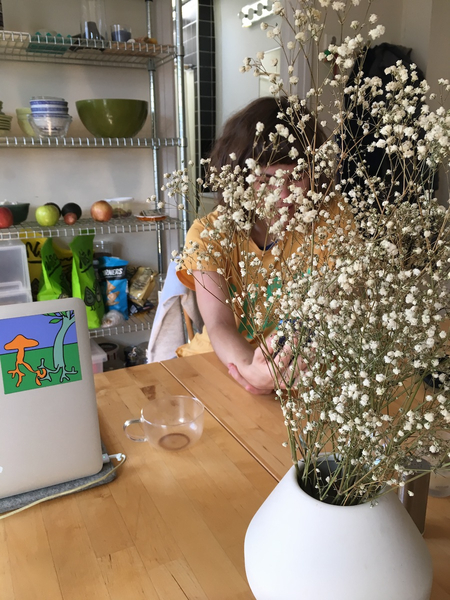
Of course. But it is a trade secret. Nothing special, though as we know, a secret today is wholly secret only when it stays outside the internet. Outside the servers of Google or the Internet Archive Wayback Machine, that is. We have talked about many things today, but perhaps what I really want to share is there—across this table where I sit facing you, right beside this baby’s breath.
-
The previous example seems useful when planning an online exhibition around content and technology. Could you introduce other projects that made active use of a website?
A website’s beauty doubles when it serves a practical purpose: when it leads a project from the outset, for example. thisisneverthisisneverthat (2020), which Workroom made with the fashion brand thisisneverthat, was not initially planned at all. The website was a tool for organizing information on some 3,000 items to be included in a book. Using Excel or Google Sheets to organize images, product names, product codes, types, colors, materials, and other information made reworking the data inconvenient. At first, it resembled a headless CMS that managed only a database, with no frontend. As the database grew, it naturally expanded into a full website. If a website performs only the traditional role of print, it gives up many of its possibilities.
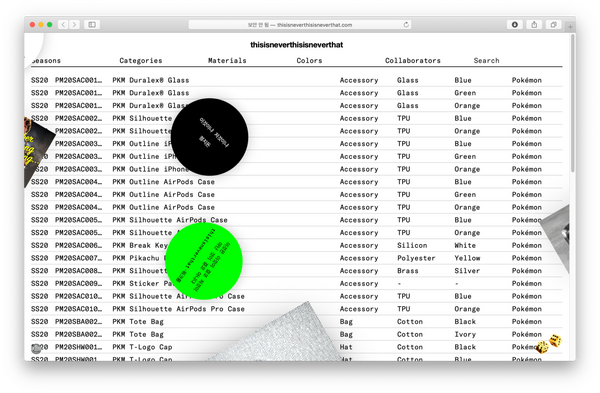
Min Guhong Manufacturing, thisisneverthisisneverthat, 2020, website. Image courtesy of the artist The recent Typojanchi 2021 project was not so different. Content for the catalog was also edited on a website initially built as a working tool.
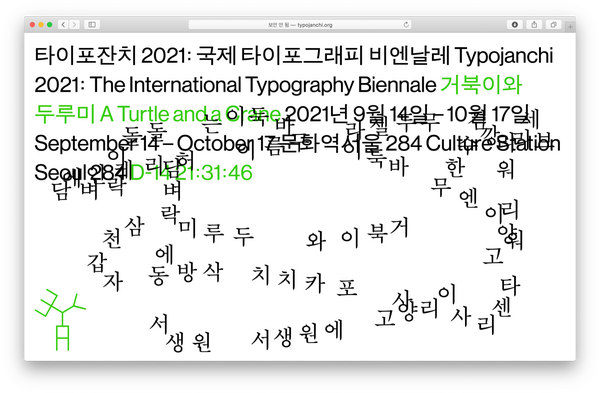
Min Guhong Manufacturing, Typojanchi 2021 Preview, 2021, website. Image courtesy of the artist 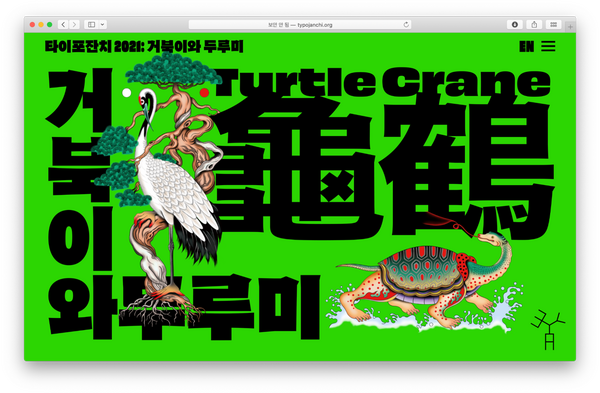
Min Guhong Manufacturing, Workroom, Typojanchi 2021, 2021, website. Image courtesy of the artist For We Came from the Sea (2021), organized by Kim Ikhyun, Park Gahee, and Lee Miji, we used a Wi-Fi router called the “Ogasawara Kit.” First, we made a recruitment website that collected and analyzed participants’ names, places of residence, phone numbers, email addresses, and so on. Applicants in Korea received a particular link; those overseas received an Ogasawara Kit. Inspired by the experience of connecting to the internet at an airport or Starbucks, the main website could be accessed only through the kit. Through this, we tried to address the act of connecting to the internet itself, before reaching a website.
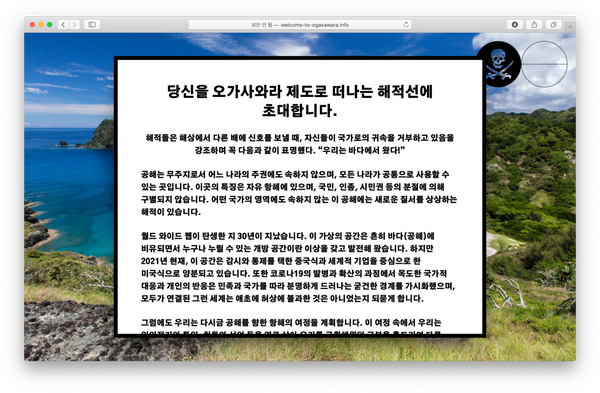
Min Guhong Manufacturing, We Came from the Sea, 2021, website. Image courtesy of the artist -
I am a fixed-term teacher advising a high school literature club. Next week I plan to discuss different experiments with form in writing with my students. May I use your FAQ as reference material?
Of course. Whatever the subject, please feel free to use it, including the images, for educational purposes.
-
This may be a sensitive question, but could you tell us which work you made for the lowest fee?
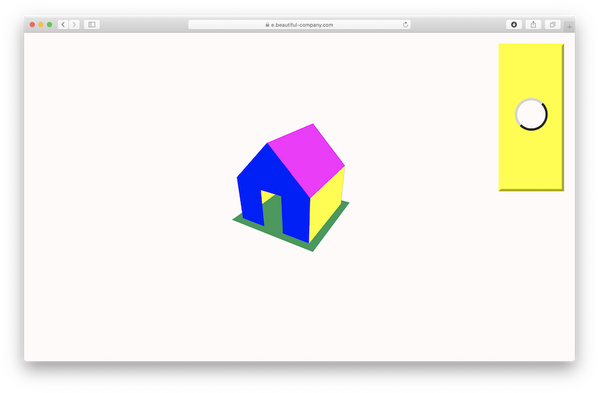
Bell House, introducing the eighth IRL Club. IRL Club describes itself as ‘anti-TED’ and is a gathering for discussing all kinds of computer culture. I hear it is currently on hiatus. I made the work with Beautiful Company, run by Laurel Schwulst. As the title suggests, it implements a ‘bell’ and a ‘house’ in a web browser. Bugs were deliberately inserted so that visitors would not confuse it with reality.
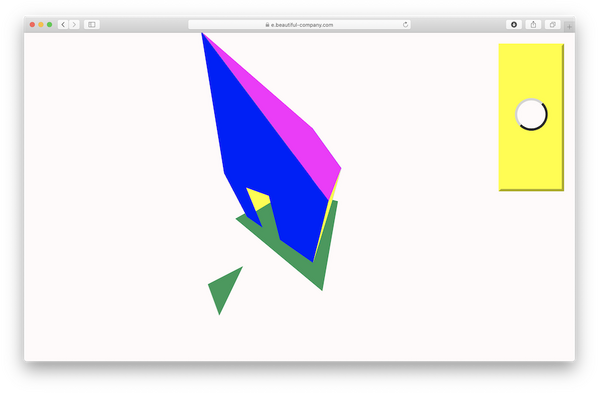
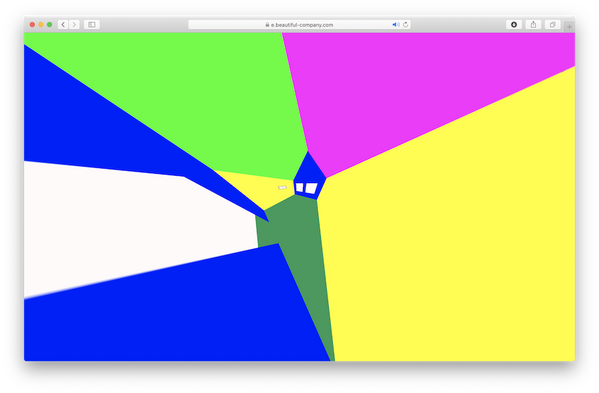
I was in New York at the time and had plenty of time. I no longer know why, but in place of a fee I accepted a delicious lunch and organic watermelon juice at Cong Ly, a Vietnamese restaurant run by Chinese owners in Chinatown.
-
Production on the web takes many forms: posting comments on portals, keeping a blog, editing Wikipedia, or using social media. The most active form is probably making a website yourself. How is a website made?
According to a Google search, there are 1.9 billion websites on the web as of 2021. That means there are at least 1.9 billion ways to make a website—many more, in fact, if we count sites absent from the statistics. In broad outline, though, the process resembles making a book: planning, producing, editing, and publishing content.
In the past, people used WYSIWYG (What You See Is What You Get) software such as Namo WebEditor, Adobe Dreamweaver, and Microsoft FrontPage to edit content. Today, professional work generally takes place in a text editor, which you might call a ‘word processor for coding.’ Letters take over the work performed by icons in a graphical user interface (GUI). This is why I keep saying that making a website is no different from writing.
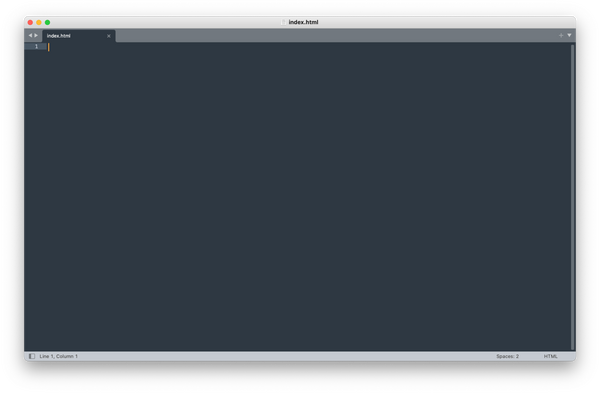
The main screen of Sublime Text: a word processor for practical and conceptual writing. At Min Guhong Manufacturing, we first identify what matters in the content—what should be emphasized—and whether the user or operator must be able to control it after launch. This determines whether to focus on the front end or build a back end as well. The front end is what ordinary users experience in a browser; the back end is, literally, the technology working behind it and interacting with it. We then study the content, build a database, and arrange the screen and its details according to the concept. We may develop particular functions, too. Today, a website needs at least two layouts, for smartphone and desktop screens. Sometimes we also consider tablets, laptops, and displays larger than desktops, such as electronic signs. Additional work includes checking semantic tags and web standards, search-engine visibility, and security. If there is time, we even consider whether the writing—the code—is beautiful. The order varies by project, but all these activities interweave and happen almost simultaneously. Rather than discussing mockups, we tend to look together at a working website that already incorporates the technology and concept, however simply. This may sound long-winded, but in fact anyone can make a website once they learn just two computer languages: HTML and CSS (Cascading Style Sheets).
-
Do you not use social media such as Instagram or Twitter?
When I first founded the company, I enthusiastically tried using them to introduce it, but the more I used them, the less they seemed to suit the company. On Instagram, even a single line of text requires an image or video; on Twitter, there is a character limit. Using a social media platform means tacitly agreeing to these constraints.
In particular, hyperlinks in Instagram posts do not work. (I understand this feature can be activated for a fee.) This is presumably Instagram’s strategy for keeping users in its ‘fantasy world’ as long as possible. Whatever its intended purpose, the ‘like’ feature also places your posts—and, by extension, yourself—in a position to be judged by an unspecified mass of users you will never meet in real life. Seeing that judgment with your own eyes, reduced to an adorable heart icon and a number of only a few hundred, is an ordeal. Not everyone can have lots of likes, so someone may end up feeling insignificant or denying the value of their own life. I have known the experience of becoming so absorbed in an addictive timeline that leaving it becomes frightening ever since the days of dial-up online services. In the end, Min Guhong Manufacturing decided to live parasitically on Workroom’s account, even on social media.