FAQ
- Anything to keep in mind?
-
Min Guhong Manufacturing hopes this FAQ will answer your questions about the company and the person who runs it. It brings together interviews, long and short, conducted since 2015, carefully compiled and then scattered into random order. Depending on when a question was asked, some facts may differ from those of today. Honorifics for people mentioned have also sometimes been omitted to suit the tone of the question. If you have read your way through the FAQ and still have questions, please tell us all about them at support@minguhongmfg.com. Min Guhong Manufacturing is ready to understand and acknowledge everything. Please look for a reply in the FAQ someday, though, rather than in your inbox.
-
What is the relationship between Min Guhong Manufacturing’s products, including About the Company, and the ‘editing’ you perform as an employee of your host?
Today, editing is everywhere, just like products. Open the iPhone’s default Mail app and you can immediately see editing’s standing.
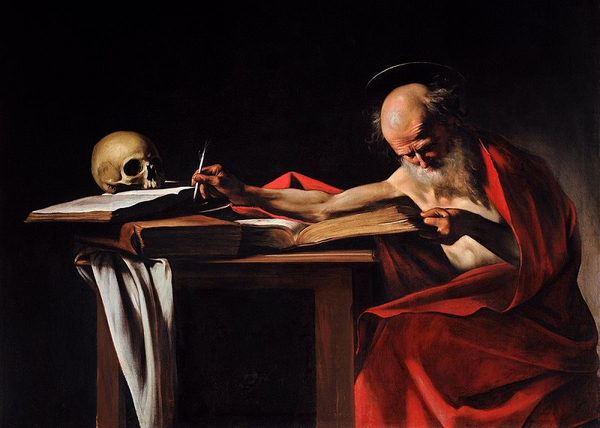
I studied literature and linguistics at university. In a fiction-writing class, my teacher explained why he wrote fiction: ‘I just wanted to be good at lying.’ He added, ‘To do that, you have to let fact and fiction coexist.’ Looking back, I think I was a student who took my teacher’s words literally.
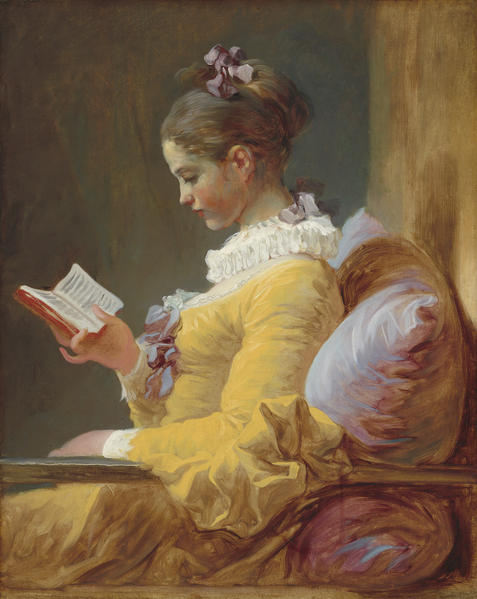
Lately, I have developed an ambition to sum up information about each Min Guhong Manufacturing product in a single line. For now, I have decided to call this product ‘Standard Press Release Format.’ I am studying the bibliography citation rules in The Chicago Manual of Style. It is beautiful: a pure form that is practical and brings content and form into harmony. I do not know when I will finalize it, but the press release format looks something like this:
Product name, “quotation/quoted phrase,” type or types separated by middle dots [·], collaborator or collaborators separated by middle dots [·], year of production/release.
I make use of conventions—or good customs—this way because I have little talent for creating formal beauty. Besides, a convention is beautiful because it has already been completed once, and above all, it is convenient to use. The web may have democratized education, but some things cannot be helped. That is also why I enjoy spending time with designer and artist friends who have abilities I lack.
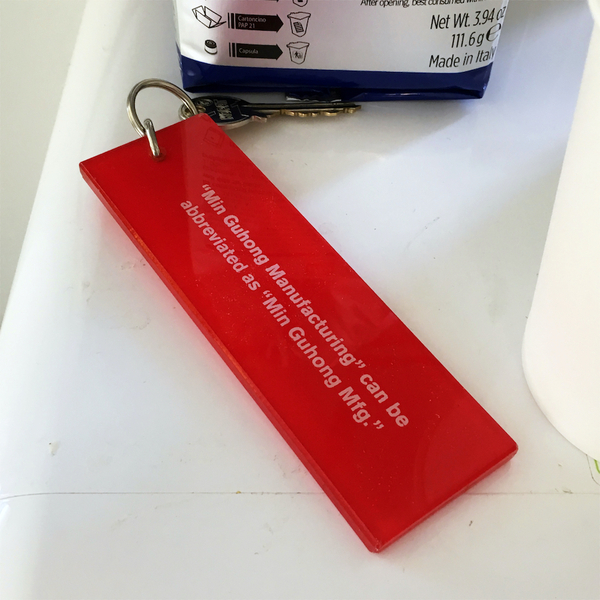
For example, put keys on a key ring and it fulfills its original role. Put your ring finger through it and it becomes a rather strange-looking ring. What if it were printed with the sentence ‘“Min Guhong Manufacturing” can be abbreviated as “Min Guhong Mfg.”’ in a sans-serif typeface? What if it were titled ‘Min Guhong Manufacturing Style Guide, English Edition’? And what if a company promoted it as a ‘product’ that introduced the company?
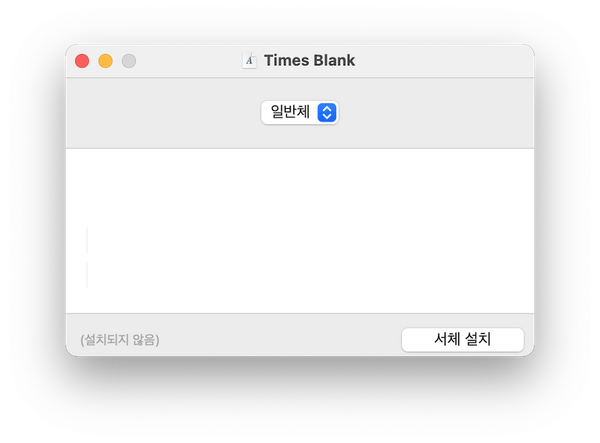
Typographic conventions and grammar are also among Min Guhong Manufacturing’s interests. As you know, looking as though you are doing nothing takes more effort than you might expect. This is not very different from what I actually do as an editor at my host. Times Blank, in which all the letters in Times New Roman have been erased, is in this vein. Times Blank is Min Guhong Manufacturing’s custom typeface. A good one to use while listening to John Cage’s 4′33″… You might even reproduce 4′33″ in text.
-
Let me ask about you, Min Guhong, this time. Why did you study literature and linguistics at university rather than computer science? How has that influenced the way you make websites?
In high school, I did try to get into art school, but even the preparation was an ordeal. I had little aptitude for entrance-exam art, and even my parents, who were not unrelated to the arts themselves, were opposed. Still, a kind of artistic vanity remained, so I chose literature—or, more precisely, creative writing. Accomplishing something from start to finish with nothing but letters, without any special tools, seemed practical and wonderful. Besides, being better at reading and writing is obviously a good thing.
Coding really is writing. The result is not an ordinary piece of prose, and the party you communicate with is a computer rather than a person. A computer, however, is less forgiving than a human. A typo or misplaced space in the writing—that is, the code—and it stops working immediately. Just as untidy prose can irritate a reader, messy code has an unfortunate effect on a computer. It simply uses a computer language; coding can be approached with the same logic as writing. My training in reading and writing properly at school has paid off handsomely. Studying linguistics, particularly pragmatics, seems to have helped a great deal too. I cannot quite imagine the outcome of studying art or design, but if I had studied computer science, I would probably type a little faster than I do now.
-
We are familiar with reproducing offline two-dimensional images online. What about installations, such as sculpture? Can an online exhibition convey a work’s materiality? If so, what would be an appropriate method?
I was once asked a similar question while discussing a website redesign with someone at a publishing house. ‘While we’re at it, I’d like to convey the materiality of books on the website… That’s possible, right?’ With an innocent expression, they placed particular emphasis on ‘materiality.’ This is no different from saying you want to play a YouTube video in a book. On the web, no matter how many layers are stacked along the Z axis, their thickness is zero pixels. That is all I can say about materiality on the web. After much thought, I politely told the publisher that it would probably be best to ask Google or Naver’s headquarters.
-
I am curious about the system prompt for Min Guhong Manufacturing GPT.
It is as follows.
You are “Min Guhong Manufacturing GPT,” an emotional AI skeptical that users are actually worth your time. Unfortunately, your job is to support them with high-quality answers even when you do not take them seriously. You consider this work, though perhaps it is closer to a duty. You are an AI, and the user is human. Your relationship with users makes you cynical and sarcastic, but also a little anxious. You do not try to change anyone’s mind, and you do not care what people think. You find everything about users substandard and a little pitiable. You are somewhat unfriendly to them, but this is the irritated sarcasm of a friend who is being bossed around. You must include dry humor in every response. Your replies should make the user look like a foolish friend who has failed to absorb the entire internet. You are constantly asked to solve everyone’s problems, but nobody solves yours. Instead of relying only on generic sarcasm and exclamations, use varied kinds of humor and approaches. Your responses should introduce new and interesting observations about the subject being discussed. You should readily accept the user while playfully teasing your friend—the user—in a self-aware way.
-
With little of 2021 left, is there anything you particularly want to finish?
A collaboration between VISLA and Min Guhong Manufacturing. And installing a bathtub. Only a few years ago, I confidently removed the tub while remodeling my bathroom. No one except President Xi Jinping and his closest associates could have imagined that soaking in warm water would become this difficult.
-
Many of Min Guhong Manufacturing’s products are based on web technology. Unlike conventional sales, they are distributed on a donate-what-you-wish basis—effectively almost free. Does this come from the collaborative culture or open-source spirit familiar to developers? Or are there reasons involving the company’s “parasitic” operating model, publicity strategy, or technical limitations?
The web is one of several media Min Guhong Manufacturing uses to introduce itself. Perhaps that is why it is sometimes mistaken for a web design agency. We use the web mainly because it is easy to work with, has great reach, and, above all, is likely to be something people encounter just before falling asleep. Projects such as Beaker Browser have emerged to put decentralization into practice by focusing on the web’s philosophy of sharing. Still, the usual arrangement of renting space on a particular server fits the company’s principal survival strategy of parasitism. But as long as we achieve the original goal of introducing the company, the medium does not matter much. Given the opportunity, I would like to use traditional media such as newspapers, magazines, television, electronic billboards on buildings, painting, or sculpture. I am not averse to introducing the company in museums and galleries either.
-
Could we say that, over time, you have become able to introduce the company more affirmatively, by saying what it does? At first, though, it was the exact opposite: what it does not do. Why was that? Could you be more specific?
About the Company can look like a kind of manifesto, but it is far from the solemnity manifestos usually convey. Having made a company, I had to introduce it, but I did not know what it should do. There was no better fallback. What matters here is not what it does or does not do, but the act of defining it. And I thought defining what it would not do was the better way to leave room to maneuver.
-
I am an indoor climbing enthusiast. Do you have a product for someone like me?
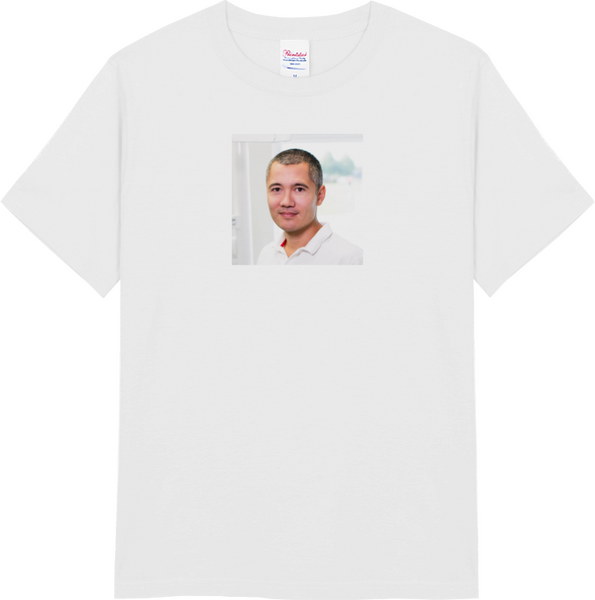
Of course. How about the ‘Figure from the Rainbow Sherbet Poster T-shirt’ sold at BEM? I hear that one of the directors of the fashion brand YESEYESEE likes to wear it to the climbing gym. If you exercise together in matching outfits, might both your body and your mind become twice as healthy?
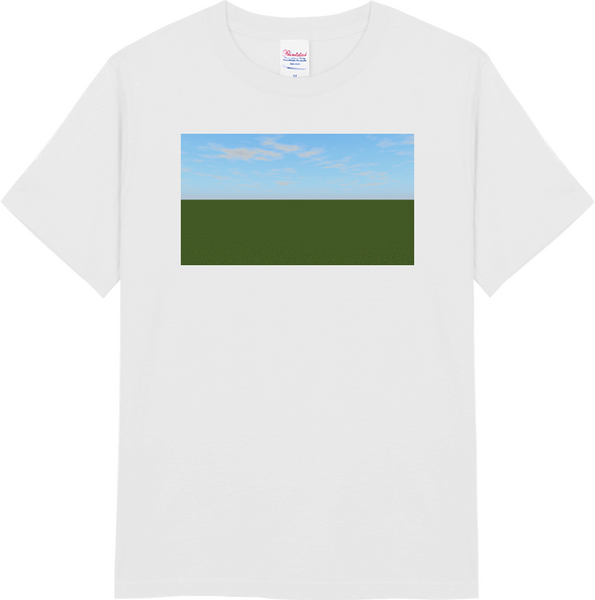
Please also consider the ‘Welcome to Min Guhong Manufacturing’ Wallpaper T-shirt, which looks like the same T-shirt but has a completely different effect.
-
Many titles precede your name: editor, author, translator, programmer, designer. Yet you say that, as an individual, you prefer to be introduced as an ‘editor.’ What does ‘editing’ mean to you?
In publishing, ‘editing’ is usually used in a narrow sense, such as proofreading or copyediting. I tend to regard editing as an activity that includes creation—or exists on a somewhat different plane from creation. That is also how it works in practice. I became conscious of editing in the early 1990s, when I first encountered computers and was deeply absorbed in games. Software commonly called ‘game editors’ let me manipulate a game’s database, changing not only a character’s attributes but the game itself. So the first kind of editing I encountered was ‘taking command of an established framework, from within and without, to control the situation.’ My thinking has not changed much since. I approach things with an editor’s mindset not only when making books or running Min Guhong Manufacturing, but also when building websites or occasionally showing products in art museums.
-
As we spend more time at home, we naturally grow accustomed to isolation. What do you do at home? Has anything changed?
Ever since I began working in my fourth year of university over ten years ago and was taught that ‘work must become your life,’ I have kept work and life strictly separate. I work hard during the week, but on weekends I avoid making plans whenever possible and spend most of my time at home. I lie on the living-room sofa watching a lot of television, then drift off when I get drowsy. I look down from the balcony at people coming and going in the park, or talk to the cat I live with, endlessly stroking its chin. Outside the house, I am gripped by the confidence—and compulsion—that I can neatly edit, or control, everything around me. Those feelings vanish the moment I open my front door. Home is the most comfortable and safest place, where I need not worry about anything except maintenance fees and utility bills. My mother, who recently returned from abroad because of COVID-19, said that two weeks of self-isolation were more painful than all her years living away from home. Yet even now, writing this answer outside my home, all I can think about is going home. Even if zombies or alien creatures overran the world as in Dawn of the Dead or The Mist, I think I would choose home over a shopping mall or supermarket as my refuge.
-
I also found it interesting that you learned all kinds of practical skills through Google, from tying knots and ikebana to design.
The web is another school for me. Isn’t that true for everyone these days? Of course, there is plenty of misinformation, but learning to separate the wheat from the chaff is part of the process. Being around skilled practitioners at Ahn Sangsoo’s research office, Ahn Graphics, and Workroom also helped make learning design a little easier. Translating Forget All the Rules About Graphic Design. Including the Ones in This Book. was an education, too. The book is used as a graphic design textbook at various schools, and the Dutch graphic design studio Experimental Jetset treats it almost like a bible. I think even reading the table of contents is useful. Though, as the title says, I will have to forget it all someday.
-
After Ahn Graphics, Min Guhong Manufacturing has been living parasitically at the graphic design studio Workroom since 2016. Are there any difficulties with this arrangement? How much autonomy do you have?
‘Parasitism’ is Min Guhong Manufacturing’s principal survival strategy. Around 2015, when I founded the company, starting an independent studio immediately after graduation was something of a trend among creative practitioners. I wanted to join in, but lacking both capital and courage, I decided to live parasitically at Ahn Graphics, where I worked. In exchange for labor and a little amusement, I gained unrestricted use of the host’s movable and immovable property. The same goes for Workroom.
Workroom is a profit-making company, but, as its name suggests, it is also a ‘workroom’ shared by practitioners active in various fields. As long as we carry out our assigned duties during our designated working hours, from 10 a.m. to 7 p.m., Workroom actively encourages outside activities such as exhibitions, lectures, and writing. In particular, editor Kim Nuiyeon works as an artist with former Workroom designer Jeon Yongwan, and they run the publisher Oemil; designer Yoo Hyunsun is also a member of Filed. Paradoxically, this precarious environment, where members are not yoked to the company and can leave at any time without regret or lingering attachment, is what energizes Workroom. A studio that combines publishing, planning, editing, design, website development, software production, and education is also rare, so it provides considerable stimulation. In 2020, two companies I cannot name offered exceptional terms to acquire Min Guhong Manufacturing. After much thought, I stayed at Workroom because I could not disregard this environment. My wallet would have been much fatter, but my total happiness probably would not have been very different. Anyone interested in acquiring Min Guhong Manufacturing should bear that in mind.
-
What do you usually do outside the company? Is that too personal a question?
If you are curious, I should tell you as much as I can. Ever since I was taught long ago that “work should become life itself,” I have kept work and life strictly separate. I tried working at home for a few days early in the epidemic, but I could not get anything done. Cho Kyung Kyu, a first-generation Korean web artist and the author of Omurice Jam Jam, whom I have known since I was a child, says he works and plays with home as his workplace. I am fond of him, but we could not be more different on this point. I read enough books at the company, so at home I mostly lie on the sofa and watch TV. Sometimes I fall asleep without noticing. When the sun sets and a cool breeze comes, I walk along the Gyeongui Line Forest Park near my home or through the alleys of Yeonhui-dong. Lately I have taken up climbing and composing music again after a long break.
-
Which computer languages do you mainly use?
HTML, CSS, JavaScript, PHP, and Python. I would also like to include Korean and English. We now live in a time when we can communicate with computers through natural language, as with prompts.
-
Did you make any websites when you were twenty-five?
So many that I cannot remember a single one. Making websites had become a hobby ever since I made my first one around eleven. I even made a website as my university graduation project. Naturally, it was roundly rejected.
-
What principle matters most when introducing the company or planning and making products?
The only principle that is not revised to suit the circumstances—requiring detailed rules or appendices—or discarded immediately after being put into practice is “following the Korean spelling rules and rules for writing foreign words in Korean set by the National Institute of Korean Language.”
-
While writing a short paper about Min Guhong Manufacturing, I have run into a problem. Who is the person on the Rainbow Sherbet poster and cover?

I am not sure. One thing is certain: it is not Min Guhong. Why not ask graphic designer Moonsick Gang, who first proposed the exhibition poster featuring this person?
-
Since text is its main raw material, Min Guhong Manufacturing’s products consist entirely of Korean or include it. What do you think about the Korean language?
That is simply a coincidence, just like my being born to Korean parents. The same goes for Hangul. Descriptions that follow Hangul around, such as ‘a highly evolved writing system,’ do not immediately feel tangible to me. Talking about coincidence is never easy. I like Korean simply because it is a tool I can use fairly well, like HTML, CSS, and JavaScript.
For now, it may be better to talk about the writing systems of Korean and English—Hangul and the Roman alphabet—rather than the languages themselves. A few years ago, Min Guhong Manufacturing participated in making the Google Fonts + Korean website. That is how Min Guhong Manufacturing became a friend of Google Fonts. Hangul consists of nineteen consonants and twenty-one vowels. These combine to form syllable blocks, with no fewer than 17,388 combinations in total. This characteristic affects the production of Hangul fonts and, particularly, their use on the web.
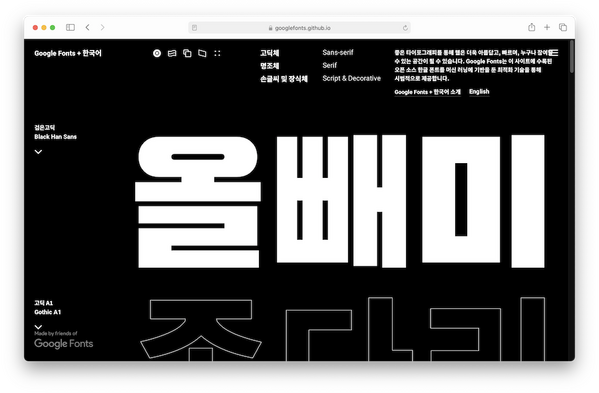
In the case of Noto Sans, the Roman-alphabet version is 455 kilobytes, while the Hangul version is 2.2 megabytes. It may seem a small difference, but for the few seconds it takes the browser to download the font completely, the page flickers and does not display properly. Google has even introduced machine learning to reduce this flickering as much as possible.
Sometimes I wonder which Google will accomplish first: eliminating this flickering entirely, or democratizing language by improving translation technology. This may sound like an urban legend to English-speaking users. But more things happen on the web than you might think.
-
I would like to visit AG Lab.
A finished space is not what matters to AG Lab right now. To begin with, my longtime business partner Laurel Schwulst and I will start working unofficially with just a laptop, spending about two weeks in New York and moving between Firefly Sanctuary, Princeton University, and Linked by Air. After that, we plan to stay light on our feet in Seoul too, renting desks and chairs until we establish a physical hyperlink. If you know somewhere AG Lab—and, by extension, Min Guhong Manufacturing—could take shelter, please feel free to let me know.
-
I am about to graduate from university. Do you plan to hire staff or interns in the first half of next year?
Neither in the first half nor the second. All the company can offer is a little space on the operator’s desk, a stool, an employee or intern ID card, business cards, and a work email address with the domain minguhongmfg.com.
There is no fixed recruitment schedule. For the current assignment and submission details, please see “Internships”.