FAQ
- Anything to keep in mind?
-
Min Guhong Manufacturing hopes this FAQ will answer your questions about the company and the person who runs it. It brings together interviews, long and short, conducted since 2015, carefully compiled and then scattered into random order. Depending on when a question was asked, some facts may differ from those of today. Honorifics for people mentioned have also sometimes been omitted to suit the tone of the question. If you have read your way through the FAQ and still have questions, please tell us all about them at support@minguhongmfg.com. Min Guhong Manufacturing is ready to understand and acknowledge everything. Please look for a reply in the FAQ someday, though, rather than in your inbox.
-
Above all, Min Guhong Manufacturing puts time and care into naming. Beyond ‘Manufacturing,’ I found it interesting that you describe the company as ‘parasitic’ on Ahn Graphics and now Workroom, and call its output ‘products’ rather than ‘artworks’ or ‘work.’ You have also discussed the negative market-economy connotations of ‘product.’ Could you elaborate?
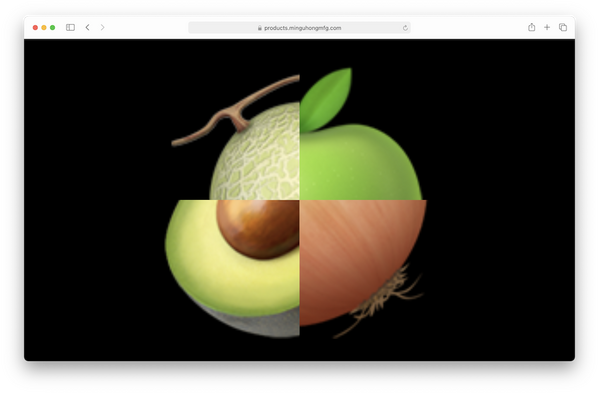
‘Is a tomato a fruit?’ Laurel Schwulst once asked this about the source code of an earlier product, Mysterious Fruit. I replied: ‘Some people think tomatoes are fruit, and others do not. But regardless of the truth, the moment I believe a tomato is a fruit, it becomes a fruit for me.’ The illusion that language transparently reflects its object has shattered. What matters is how the subject sees, defines, and ultimately edits the object. Words such as ‘artwork’ or ‘work’ not only fail to reflect the conditions in which things are consumed today; they add an illusion that obscures those conditions. Besides, since Min Guhong Manufacturing is a ‘company,’ ‘product’ seemed the natural word for what it produces. Or perhaps I called it a ‘company’ because I wanted to use the word ‘product.’
-
What are your future plans?
First, to maintain the way the company operates parasitically at its operator’s workplace—in other words, using the workplace’s movable and immovable property without permission. This provides a platform for the operator to treat Min Guhong Manufacturing as a hobby, in form as well as in fact. Second, to try a food business centered on ricotta cheese. Ricotta is relatively easy to make, delicious, and very white. Of course, as with any plan, these may be revised or postponed indefinitely.
-
I find One and Three Web Browsers, modeled on Joseph Kosuth’s famous One and Three Chairs, especially interesting. One and Three Chairs consists of an actual chair, a photograph of a chair, and a definition of a chair. But where is the actual browser in One and Three Web Browsers?
Um… What are you using to run that product, One and Three Web Browsers?
-
I am a student at the University of Seoul. What value or principle comes first for you in design?
I met Tetsuya Goto a few days ago and said, “Design is like a plugin for my writing.” As that suggests, design is fundamentally a tool for me.
In New Order, held every Friday since 2019, I explain that design is generally a verb that needs an object—more precisely, a transitive verb. Of course, Kenya Hara’s phrase “designing design” exists conceptually, but in my limited experience, design itself has rarely been the object. So the first thing that matters to me is understanding the object of design—in other words, the content. Only then can I decide how to use the tool called design.
I feel this particularly keenly whenever I make a website. There must be content, even a single character, before I can use HTML tags, CSS selectors, or JavaScript functions.
-
Could Min Guhong Manufacturing ever leave its host and become independent?
No. Min Guhong Manufacturing is destined to close the moment it becomes independent. This is also why I have never registered it as a business, despite the many requests.
-
Min Guhong Manufacturing has openly said it is destined to live parasitically on something. Do you have even the slightest intention of defying that fate? Any plans to change hosts?
Workroom, the graphic design studio and publisher where Min Guhong Manufacturing has lived parasitically from 2016 through the present, 2021, has become an ideal host. I work only four weekdays, and as long as I carry out my assigned duties comfortably within the agreed working hours, arrival and departure times are fairly flexible. Along the way, Min Guhong Manufacturing’s work sometimes becomes Workroom’s work or vice versa, and sometimes proceeds without much distinction from the outset. This is the result of five years of acknowledging and understanding each other’s existence. Could there be another host willing to accept this arrangement? Lately, what I feel is missing is a Herman Miller Aeron or Humanscale Freedom chair, and a Min Guhong Manufacturing sign.
-
I graduated from Paju Typography Institute. Have you ever used letters in an unusual way when making a website?
If there is a clear reason, unusual use of letters may be necessary, but I tend not to casually create a situation that calls for it. Maintaining the attitude I mentioned earlier naturally brings me to focus more on content. If a website is a story, I think first about what to say rather than how to say it. In fact, that matters at least a one-pixel square more. I recently had an opportunity to give a lecture to students in Hongik University’s visual communication design department, where I introduced a website called Website Carbon Calculator. It quantifies the carbon emissions of various websites, reminding us that the web ultimately relies on fossil fuels and that heavier websites affect the environment more. I hear that the annual average atmospheric carbon dioxide concentration in 2020 was 413.2 ppm, about 48 percent higher than the preindustrial figure of 278.0 ppm. Focusing on visual elements such as images, video, and animation often makes a website heavier. I am not an extreme environmentalist, but I wonder whether making lighter websites might be a way to contribute, however slightly, to humanity.
-
I also found it interesting that, after infecting every vulnerable human and saving the world, you can print the peaceful world to fit a sheet of paper and save it. It felt like a certificate after completing life-or-death training, and offered the small pleasure of commemorating the result materially. Why did you choose this ending?
For viruses or humans, I wish saving the world could be as easy and simple as printing it out and saving it.
-
I have kept trying to access GeoCities, but something seems to be wrong. Or is it my computer?
The computer is not at fault. The problem lies with us—that is, humans. GeoCities suddenly disappeared in 2009. Neocities now fills its role. A website is both a medium and a space that can suddenly appear and disappear.
Then, in the early 2000s, the Web 2.0 era began. The emergence of blogs and social media turned everyone into a creator. On MySpace, anyone could share their own music, while on Wikipedia everyone became a coproducer of knowledge. An age in which everyday life becomes art and everyone becomes an artist. Perhaps a digital version of what Baudelaire called ‘modernity’? In 2007, the arrival of the iPhone sparked a mobile revolution. With the advent of responsive web design, websites ceased to be fixed books and became fluid beings that changed shape like Proteus. Our digital experience changed fundamentally along with them. And now we stand on the threshold of a new era led by artificial intelligence, virtual reality, or VR, and augmented reality, or AR. Websites have been reborn as immersive three-dimensional spaces rather than two-dimensional planes. Like Borges’s Aleph, infinite worlds unfold within a tiny screen. Sometimes things like this happen on Wikipedia, too.
Looking back over the changes in websites, we witness not only technological development but also the evolution of the human desire for expression and ways of communicating. The websites of each era are cultural archives of that era’s dreams, desires, and aesthetics. As Benjamin said, ‘The true image of the past flits by.’ The countless websites we encounter daily will surely disappear someday, but all will be important clues to understanding our time. Just as today’s archaeologists study ancient civilizations through fragments of pottery, tomorrow’s archaeologists may study our digital civilization through archived websites. What stories, then, will the websites we make now tell future generations? This is not a rhetorical question.
-
You taught yourself skills such as design and coding—or at least do not seem to have learned them through conventional education. The results are quite unlike the approaches I have encountered before. How do you acquire the skills you need? What is your strategy?
I first encountered a computer around the age of seven and made my first website around eleven. Before coding, simply using computers was entirely natural to me. At university, I studied literature and linguistics and worked as a researcher in graphic designer Ahn Sangsoo’s office. After Ahn Graphics, I went on to work as an editor at Workroom. I learned design on the job. Luckily, I was always surrounded by excellent teachers and colleagues with both practical skills and flexible attitudes. Watching how they solved the problems they encountered in design was an important part of my education.
Translating and editing Bob Gill’s Forget all the rules about graphic design. Including the ones in this book. into Korean in 2017, on Choi Sungmin’s recommendation, also helped. The book itself was an excellent design textbook. Alongside books, I actively use the information accumulated on the internet over some thirty years. If you can turn yourself into an enthusiastic student, the internet is a pretty good school, regardless of degrees. There is misinformation, but learning to identify it is part of the education. I think my ability to acquire skills comes from the extensive practice in reading and writing I had as a student of literature and linguistics and as an editor. Information about skills is mostly written, after all.
-
I would like to return to my first question. When introducing Min Guhong Manufacturing, you use the word “parasitic” to describe its relationship with Workroom. Since Workroom is a publisher, this also sounds like your own way of understanding the relationship between the web or online world and the physical or offline world. How do you think this understanding appears not only in your relationships with Workroom and your clients, but also in your “products,” to use your term for your work?
“Product” is simply the word I arrived at while looking for a suitable term for the things made using the skills of Min Guhong Manufacturing, which calls itself a company. Of the media the company has worked with through its various products, it particularly loves websites. By their nature, websites are reproduced and consumed in large quantities. I felt this chimed with the original meaning of “manufacturing”—mass-producing new products by applying physical or chemical processes to materials or components—which sits proudly in the company’s name.
As a one-person company, Min Guhong Manufacturing inevitably has to rely on something to keep running smoothly. The word “parasitic” lays this fate bare. This also relates to the nature of websites. Almost everything on the web converges on the web browser. A website cannot reach its users without one. In short, websites are inherently dependent on web browsers as their hosts. This fragility and incompleteness make the website a medium worth continuing to explore.
On February 22, 2022, Min Guhong Manufacturing moved from its host Workroom to Ahn Graphics Lab (AG Lab), an independent division of Ahn Graphics whose identity remains a mystery. To return to an earlier answer, I acquired another title: director. The host has changed, but whenever Min Guhong Manufacturing is needed, it continues to work with Workroom, as it did on Busan Biennale 2022 and An Exhibition with Little Information. The company’s way of being a parasite is evolving toward symbiosis, something I had in mind from the time I decided to use the word “parasitic.”
-
Min Guhong Manufacturing not only presents but also sells products through left gallery and DDDD. Why participate in other online platforms? left gallery, in particular, uses blockchain so people can buy works with cryptocurrency while reproductions, distribution, and transactions of digital works are recorded. Since Min Guhong Manufacturing mainly makes, exhibits, and sells websites and digital files, have you experienced difficulties with distribution or copyright protection, or felt a need for new technologies?
“Manufacturing” means an industry that processes raw materials with human or mechanical power to mass-produce goods. Focusing on mass production, Min Guhong Manufacturing’s products can be reproduced and distributed anywhere on the web with nothing more than an HTML
<a>tag. Even when a product is revised, customers can experience the latest version simply by clicking their browser’s Refresh button. Even in memory, products can be broken down into versions. Thanks to hyperlinks, the feature that most distinguishes the web from other media, an economically ideal means of mass production and distribution has been achieved. The inherent limitation of requiring a web browser is not a major problem today, when computers and browsers are built even into refrigerator panels. Another limitation is that all frontend source code is public, so copyright issues must be left to customers’ ethics. I would like to follow Amazon’s expansive generosity, at least toward its customers. Meanwhile, the Greek artist Miltos Manetas wrote this in his Manetas Dogma of Painting, issued for the fiftieth Venice Biennale:Copy your most important works and allow others to copy them. All the great painters of the past copied, and that is why their works have survived to this day.
-
As the graphic design duo Sulki and Min’s introduction suggests, you have many titles—writer, translator, programmer, designer—but I hear you insist on ‘editor.’ How does your work relate to editing?
In publishing, ‘editing’ is often used narrowly to mean proofreading and copyediting, but I regard it as an activity that includes creation. I first became conscious of ‘editing’ in the early 1990s, when I encountered computers and was engrossed in games. Software commonly called ‘game editors’ let you manipulate a game’s database, changing not only a character’s statistics but the game itself. So my first experience of editing was ‘taking control of an established framework from within and without to influence the situation.’ My view has not changed much. I approach exhibiting work in museums and galleries, as well as making websites, with an editor’s mind. I also like the drabness of the word ‘editor.’ As the scope of my editing has broadened, though, the books I am responsible for have been delayed. I barely managed to complete the recently published All-In Fighting. I can only apologize to the authors and translators who understand me and wait without a word. I would like to take this opportunity to send them my regards.
-
Why does Min Guhong Manufacturing’s official website look like this?
Since its sudden establishment in 2015, Min Guhong Manufacturing has pursued the act of “introduction” with an attention to detail and an obsession that can sometimes look absurd. (The company’s first product was About the Company, published as the thirteenth Audiovisual Pavilion Document.) This is because Min Guhong Manufacturing believes that beneath all productive activity lies a desire to introduce something—and, by extension, the producing subject: oneself. Min Guhong Manufacturing appropriates the form of a “company” to make this belief conscious and give it a style. All of its activities ultimately converge on “introduction.” Its official website was made almost at the same time as the company was founded. I thought any self-respecting company should first have a plausible official website. Among its few menus, the FAQ is a space that mixes together interviews conducted so far. It also serves, to an extent, as the company’s portfolio, and I wanted it to show that the company’s strategies originate in writing. Out of the company’s love for the web, the design follows the style of the very first website. As time accumulates around something, it acquires an aura that design alone cannot explain. That aura is what the company actually hopes to inherit by following the first website’s style.
-
I have more questions.
So do I. If the opportunity arises, it would be good to arrange another conversation. This was only a summary of some things we discuss in New Order, but I hope today’s conversation has been of some help to producers and consumers in art and design. Do not, however, take my words on faith. Didn’t the recently departed graphic designer Bob Gill say it too? Once you understand the rules, you must forget them.
-
Hello. I would like to request a written interview with Min Guhong Manufacturing. I have listed the questions below in Times Blank, known as the company’s custom typeface. There are quite a few questions, and I would appreciate answers to all of them.
Pleased to hear from you. Looking through them one by one, most seem to concern matters already discussed in interviews. Why not first consult the FAQ on Min Guhong Manufacturing’s official website? If anything is still missing, please feel free to contact us again.
-
I have been accepted as an undergraduate intern at KAIST’s Visual Instruments Lab, led by E Roon Kang. I have to move to Daejeon in March. Is there a product you would recommend?
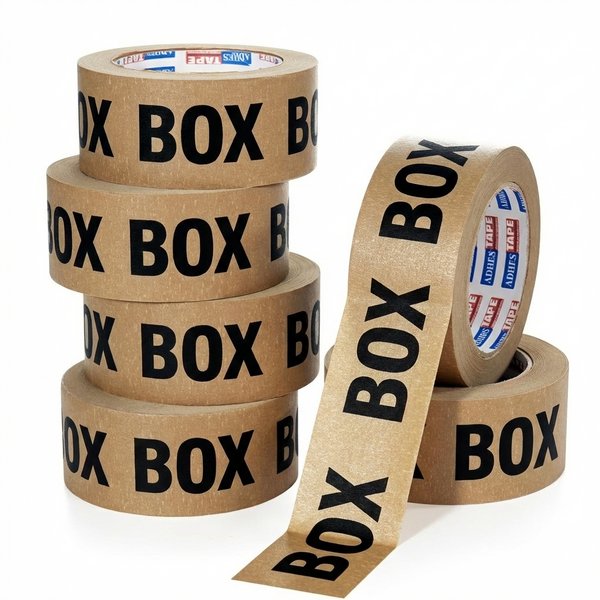
First, congratulations. How about Box Box Tape? It is good for packing boxes. What distinguishes it from ordinary packing tape is that ‘BOX’ is printed on its surface.
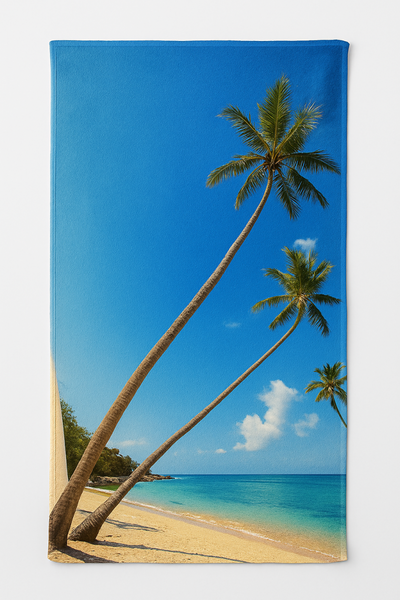
I also recommend Beach Beach Towel. Even in Daejeon, one of Korea’s best-known basins, you can imagine the seaside.
-
I am a student at Kaywon University of Art and Design. I missed your special lecture because of my part-time job. Is there any way to hear it again?
-
What do you think about the future of paper books?
For me, the precious legacy of the paper book is its way of organizing and introducing content on paper—that is, on a limited, flat surface. This method contains the accumulated successes and failures of countless specialists: scribes, editors, printers, designers, cognitive scientists, and others. Thanks to them, we can discuss an appropriate type size for the distance between the content and the eye, an appropriate line length for that size, and an appropriate number of lines for that length. Seen this way, there is nothing strange about the method being reproduced or used not only on websites but in countless media where content resides. For some, the death of the paper book may be an inevitable future. But this method, which originated in paper books, will remain.
-
What is an appropriate budget for making a website? Since everyone holds their breath when costs come up, perhaps this is the most important question.
It varies enormously with the schedule, the website’s scale, and the functions required. It can range from a few million won to hundreds of millions. Each practitioner will also have different rates. Min Guhong Manufacturing tends to use the total cost of producing a book as a benchmark. Making a website includes not only planning, editing, and design, which are independent of the medium, but also production, distribution, and management. Running costs must be considered too: buying a domain, renting a server, resetting the traffic allowance when it is exceeded, and so on. Not every project has a generous budget. Taking the client’s circumstances to heart, Min Guhong Manufacturing sometimes proposes an approach suited to the budget so the work can proceed somehow. In return, in keeping with the company’s principal business of introducing itself, I ask them to introduce the company in some way.