FAQ
- Anything to keep in mind?
-
Min Guhong Manufacturing hopes this FAQ will answer your questions about the company and the person who runs it. It brings together interviews, long and short, conducted since 2015, carefully compiled and then scattered into random order. Depending on when a question was asked, some facts may differ from those of today. Honorifics for people mentioned have also sometimes been omitted to suit the tone of the question. If you have read your way through the FAQ and still have questions, please tell us all about them at support@minguhongmfg.com. Min Guhong Manufacturing is ready to understand and acknowledge everything. Please look for a reply in the FAQ someday, though, rather than in your inbox.
-
The company’s first product, About the Company, lists thirty-seven things the company does not do, in English and Korean alphabetical order. Was that because the company’s main business was unclear at the time?
It still is. Also at work was a somewhat unfounded belief that, for a company, what it should not do matters more than what it does. Every item remains valid, including ‘Min Guhong Manufacturing does not collect donations in Bitcoin.’
-
Is there anything you would like students preparing their first portfolio to make sure they show—or anything you would prefer they avoid?
People reviewing a portfolio look closely not only at the work it contains but also at the portfolio itself. It is another piece of work in its own right, showing your skill in selecting, arranging, and emphasizing content. Also, please refrain from ending the last page with a phrase like ‘Thank you.’
-
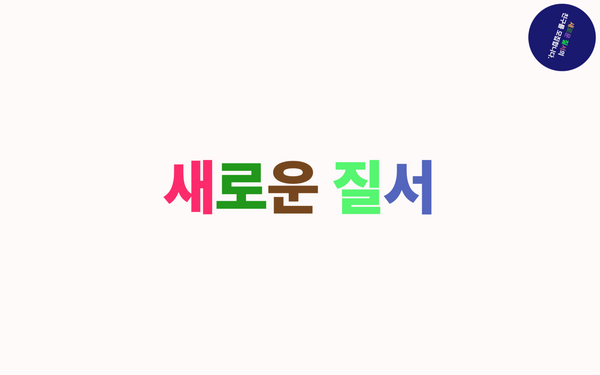
This piece seems almost like an offshoot of your website. Looking around, I keep seeing the words ‘New Order.’ At first glance it looks like a school, but also something like a new religious movement.
Both are right, or both are wrong. I began New Order in 2016 after returning to Korea from studying at the School for Poetic Computation in the United States. ‘When you like something, and eventually come to love it, you naturally want to share that beautiful feeling with those around you.’ In New Order, we learn the basic computer languages that make up the web and use our own interests as materials to make websites of our own. Held every Friday, New Order joins arms with institutions including the National Museum of Modern and Contemporary Art, Korea, the Seoul Museum of Art, Paju Typography Institute, Haja Center, and Hongik University to share the pleasure of making personal websites in the spirit of the handmade web. The fact that more than four hundred friends have now joined New Order is also thanks to websites. Today, when websites have drawn closer to reality—or, in some dimensions, already replaced it—I simply hope New Order can be a time and place to acquire a new literacy while expanding one’s love for oneself.
-
Compared with print, aren’t Korean web fonts another barrier?
Korean web fonts contain more glyphs than Latin fonts and therefore have larger file sizes. Inevitably, this means a browser takes longer to download and render them. Cost is also worth discussing. In 2020, I asked a foundry how much it would cost to use one of its typefaces as a web font, and the price was nearly ten million won. Presumably the possibility of unauthorized distribution of the font file was factored in. Even so, I find it hard to understand a price sometimes more than thirty times that of a print license. It also concerns type designers’ livelihoods, of course, but I wish there were more Korean fonts available through Google Fonts. Recently, type designer Ryu Yanghee released Gowun Batang and Gowun Hangul, and Minjoo Ham released Hahmlet, through Google Fonts. Spoqa’s Spoqa Han Sans, based on Noto Sans, and Kil Hyung-jin’s Pretendard are particularly accomplished. Given their symbolic significance, I would love to see the Ahn Sangsoo or Choi Jeongho typefaces from the AG Typography Institute released as open source. Is that asking too much?
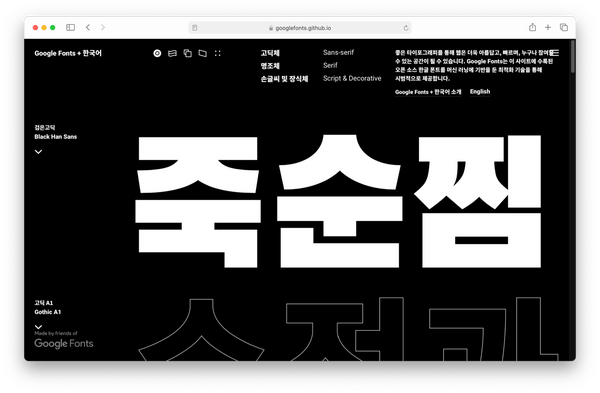
Google Fonts + Korean. You can try Korean fonts ahead of their release on Google Fonts. Through this project, undertaken with Won-Young So, E Roon Kang, and others, Min Guhong Manufacturing officially became a ‘friend of Google Fonts.’ -
I teach writing to art students who hope to become artists. What should I start with?
Writing a biography, I suppose. Shouldn’t an artist at least be able to properly write and edit the biography they will be using for years to come?
-
Could you describe the product-making process in a few words?
It is a process of solving problems—particularly the customer’s requirements—through editing. The term “manufacturing” gives some indication of how products are made. It originally means processing raw materials with human or mechanical power to produce goods, but in baseball it also refers to scoring through means other than hits, such as stolen bases, advancing runners, and sacrifice plays. Each product’s production process differs slightly, but the broad outline is similar: an order comes in, and we make and deliver the product. Of course, we also make products of our own accord.
-
You studied computer programming at the School for Poetic Computation, or SFPC, in New York. I understand that poets, programmers, designers, mathematicians, inventors, and others came together to establish it, with Taeyoon Choi, an artist based in Seoul and New York, playing a central role. What did you learn there?
I happened to discover the school around the time I left Ahn Graphics, where I had worked for about five years. I liked its name, which combined ‘poetry’ and ‘computation,’ two words that seemed unlikely companions. I also liked that Kenneth Goldsmith, a poet I had long admired, had taught there. Unfortunately, he did not teach during my time there. At first I thought it was simply a school for trying strange things with computers, but the school I encountered was much stranger than I had imagined.
Conceptual and practical classes on art and computers ran from 9 a.m. to 6 p.m. Perhaps because New York’s subway operates twenty-four hours a day, special lectures and workshops sometimes ended late at night. I spent weekends at school as well, absorbing in a short time material that would take several semesters to learn and think through at an ordinary school. I took part especially enthusiastically in the classes of Nick Montfort, a poet and professor of digital media at MIT. The students were diverse, too: a white-hat hacker, a graduate student in criminal justice, an architect, a dancer, an electronic musician. For example, the friend who taught me coding conventions had worked as a baker in France. We spoke a few days ago, and lately that friend has been absorbed in making kaymak, a Turkish dessert.
It is not, however, the kind of school that kindly teaches you each technology from scratch. You need at least some familiarity with computer languages to follow the classes comfortably. A teacher would offer a hint needed to solve a problem, and students would use it as a signpost while wandering the internet, recognizing their desires and technical limits and devising ways around them. What matters is not the technology itself but which technology to use, and how.
As the school’s name suggests, programming has much in common with the way I learned to write poetry: there is a poetic subject, or input; a poem, or output; and between them, poetic perception, or a function. Attending SFPC made me feel this relationship more clearly. That is why I like to say I studied ‘literature and linguistics in a narrow sense’ there, rather than computer programming.
This was also when a movement centered in New York was beginning to rethink increasingly complex web technologies from the ground up. At the same time, graphic designers were actively discussing a ‘content-centered web.’ Meeting friends who were already putting into practice things I had long thought about gave me courage, too. Laurel Schwulst, who asks me to introduce her as my ‘best American friend,’ is someone I met then. She is around my age and a central figure in the movement I just described.
-
How did you first introduce your work to the world? I’m curious about what led you to establish your own distinctive voice or position.
I began with a text commissioned by the exhibition space Audiovisual Pavilion for its Audiovisual Pavilion Documents series. Under the title About the Company, I listed thirty-seven things Min Guhong Manufacturing does not do. I did no promotion of my own; I simply relied on Audiovisual Pavilion’s reputation. I think that more or less established my position.
-
How might online and offline publications—websites and paper books—mix?
If I may, I would like to answer with another question. Do paper books and websites need to mix? Websites were originally invented so that scientists could share papers efficiently. Information that had been confined to footnotes, marginal notes, and endnotes became “real” information that could be opened with a single click or touch, thanks to blue, underlined hyperlinks. Websites grew out of paper books and made up for their shortcomings. In other words, they are paper books that have evolved. Trying to compare paper books and websites on the same plane will therefore only send the question around in circles.
For me, the valuable legacy of the paper book is less the paper itself than the way it presents content on paper—that is, on a limited flat surface. This method contains the accumulated successes and failures of countless specialists: scribes, editors, designers, printers, cognitive scientists, and more. Thanks to them, we can discuss an appropriate type size for the distance between the content and our eyes, an appropriate line length for that size, and an appropriate number of lines in turn. Seen this way, there is nothing strange about this method being reproduced or used not only on websites but in many other media. Paper books may disappear in the distant future, but perhaps this method will remain unchanged.
-
What do you think about Choi Jeongho’s current recognition and reputation?
If I answer by guessing the intention behind the question, I do think he is less well known than his achievements warrant. But just as we do not know every detail of a product’s history when using it, and have no particular need to, I don’t think we need to feel disappointed that many people do not know Choi Jeongho well.
-
In the web world you belong to, do you think someone can become a designer without majoring in graphic design? Or is your case an exception?
I did not major in design, but I was fortunate to have skilled teachers, senior colleagues, and peers around me. Watching how they worked right beside them, I was able to learn design—or, more precisely, the technique called ‘design.’ It was particularly helpful to examine the reasons behind the decisions they made while designing. I also received a lot of help from Google, another school where I learned design. These days I even get help from ChatGPT. As a designer, I am neither a typical nor an exemplary case. It would be more appropriate to see me as a kind of fable. Since I entered design by chance, or unexpectedly, without setting out to become a designer, there was no model I felt obliged to follow or particularly wanted to follow. Above all, following a model is no guarantee of becoming like it. If there is a model, what matters is referring to it and editing it to suit yourself. Who I am now is simply the result—or the process—of feeling my way toward the greatest good from where I stand: spending eight of the day’s twenty-four hours happily.
-
Do you not use social media such as Instagram or Twitter?
When I first founded the company, I enthusiastically tried using them to introduce it, but the more I used them, the less they seemed to suit the company. On Instagram, even a single line of text requires an image or video; on Twitter, there is a character limit. Using a social media platform means tacitly agreeing to these constraints.
In particular, hyperlinks in Instagram posts do not work. (I understand this feature can be activated for a fee.) This is presumably Instagram’s strategy for keeping users in its ‘fantasy world’ as long as possible. Whatever its intended purpose, the ‘like’ feature also places your posts—and, by extension, yourself—in a position to be judged by an unspecified mass of users you will never meet in real life. Seeing that judgment with your own eyes, reduced to an adorable heart icon and a number of only a few hundred, is an ordeal. Not everyone can have lots of likes, so someone may end up feeling insignificant or denying the value of their own life. I have known the experience of becoming so absorbed in an addictive timeline that leaving it becomes frightening ever since the days of dial-up online services. In the end, Min Guhong Manufacturing decided to live parasitically on Workroom’s account, even on social media.
-
I use Gabia for server hosting. Should I stay with them or move to another provider?
Good question. Of the hosting providers Min Guhong Manufacturing has experienced, Gabia ranks among the five worst for value for money. (Can you believe that PHP 7.4 is still its latest version?) And, as its name suggests, it has no qualms about playing the dominant party, or “gap” (갑), with its customers. For the peace of the internet, it would be wise to find another provider as soon as possible.
-
Are there websites you refer to while working? Any you would recommend?
For reasons of time, I do not think I can share my nearly one thousand bookmarks. I do refer to well-made websites. But if a result is too attractive, I find myself unconsciously copying it, regardless of the content. Instead of looking only at the visible result, I consider how the content was approached and handled, and imagine the working process from the beginning. Websites made purely for their creators’ own happiness catch my eye. In particular, I often visit Neocities and FC2 Web. Such websites can be visually rough, but they are not bound by formulas and sometimes gleefully defy them. Their content and the way they handle it recall something I had briefly forgotten, while making me forget newer technologies such as CMSs and JavaScript. They even make me want to become friends with the people who made them.
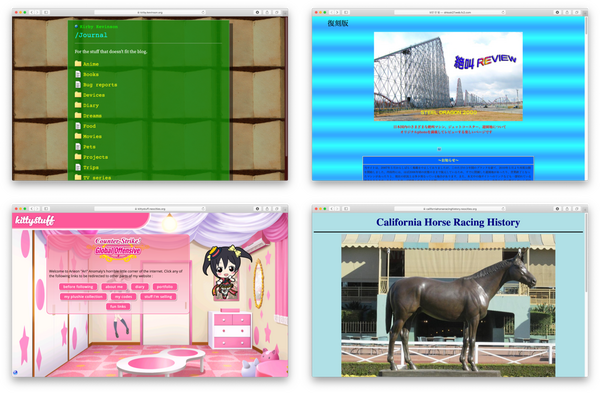
Looking at websites made purely for their creators’ own happiness recalls something briefly forgotten. For the latest web technologies, meanwhile, there is nowhere quite like MDN Web Docs, run by the Mozilla Foundation.
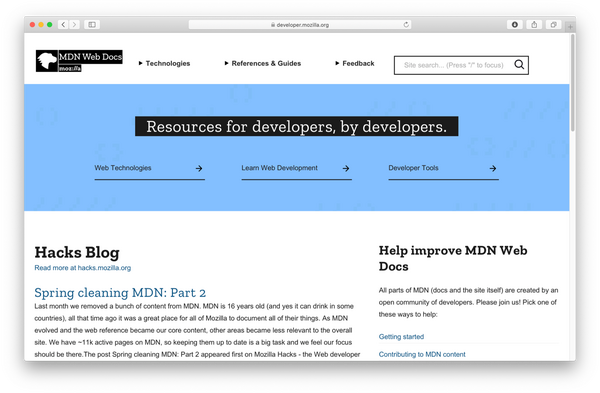
MDN Web Docs -
Who is Choi Jeongho to you?
Someone to whom I am grateful in many ways. I earned a salary by making a book about Choi Jeongho, and I gave people (laugh) using the typeface he designed.
-
Is there anything Min Guhong Manufacturing and COS have in common?
Apart from biochemical weapons, wiretapping equipment, and above all shower curtains, we do not seem very different in our efforts to make good products.
-
Which is your favorite of the 113 tags used in HTML5, the standard HTML specification as of 2020?
The
<a>tag. It creates hyperlinks, connecting one piece of content to another. The a stands for ‘anchor.’ So when we click a hyperlink on a website, we drop anchor there and move somewhere else. It is also one of the defining tags that distinguish a website from print. Content that had been merely a footnote, a marginal note, or an endnote in print acquired a new status on the web thanks to the<a>tag. It became something like oxygen for the web, making the web what it is.-
Is there a company Min Guhong Manufacturing takes as a role model?
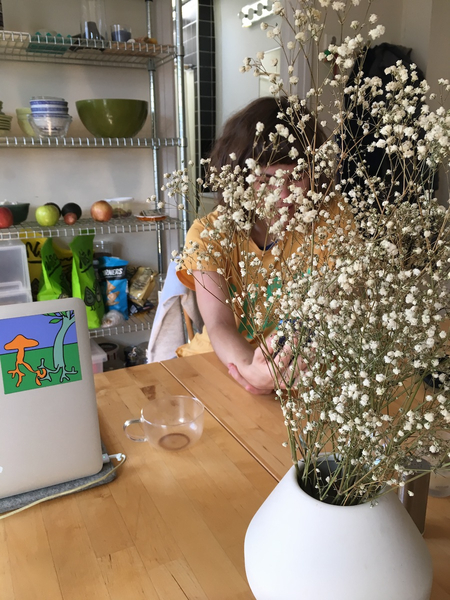
Of course. But it is a trade secret. Nothing special, though as we know, a secret today is wholly secret only when it stays outside the internet. Outside the servers of Google or the Internet Archive Wayback Machine, that is. We have talked about many things today, but perhaps what I really want to share is there—across this table where I sit facing you, right beside this baby’s breath.
-
I am a graduate of Paju Typography Institute. Do you have criteria for judging how well a website is finished?
The criteria will vary enormously depending on what a website talks about and how. As I mentioned earlier, shouldn’t it at least work properly in a web browser? Even that alone involves endless considerations. This may seem unrelated, but I would like to talk about a kind of writing. One principle of good writing I learned while studying literature is not to repeat yourself. Occam’s razor—the idea that, given two statements about the same thing, the simpler one is preferable—is a similar principle. I think it applies perfectly well to websites, including their code: combining duplicate elements or functions, for example. This requires repeated revision, just as writing does. It can be arduous, but it has to be done. Even a website consisting of a single sentence can turn out very differently depending on how much revision it has undergone.
-
I am a graduate of Paju Typography Institute. Where do you find the motifs that drive your work?
For any project, I try to find a motif in what is essential to the anticipated result, especially its title. I look words up in a dictionary for a more precise sense of their meaning, or search my memory for related experiences. In the midst of that, something may suddenly occur to me while walking down the street and looking at a tree or stone. I believe that if the process is right, much will resolve itself naturally. For Typojanchi 2021: A Turtle and a Crane, for example, I focused on the animals’ characteristics. Turtles crawl slowly on the ground; cranes fly through the sky. From there, I proposed two reading environments on the website. The “turtle” environment used one column so visitors could browse at leisure; the “crane” environment used up to six columns so they could survey all the content at once. To say a little more about titles: in personal projects where I control the title, I often withhold a project if I am not happy with its name, even when everything else is finished. I fundamentally believe the title defines the project itself. I probably spend more than half the total working time on the title.