FAQ
- Anything to keep in mind?
-
Min Guhong Manufacturing hopes this FAQ will answer your questions about the company and the person who runs it. It brings together interviews, long and short, conducted since 2015, carefully compiled and then scattered into random order. Depending on when a question was asked, some facts may differ from those of today. Honorifics for people mentioned have also sometimes been omitted to suit the tone of the question. If you have read your way through the FAQ and still have questions, please tell us all about them at support@minguhongmfg.com. Min Guhong Manufacturing is ready to understand and acknowledge everything. Please look for a reply in the FAQ someday, though, rather than in your inbox.
-
In the web world you belong to, do you think someone can become a designer without majoring in graphic design? Or is your case an exception?
I did not major in design, but I was fortunate to have skilled teachers, senior colleagues, and peers around me. Watching how they worked right beside them, I was able to learn design—or, more precisely, the technique called ‘design.’ It was particularly helpful to examine the reasons behind the decisions they made while designing. I also received a lot of help from Google, another school where I learned design. These days I even get help from ChatGPT. As a designer, I am neither a typical nor an exemplary case. It would be more appropriate to see me as a kind of fable. Since I entered design by chance, or unexpectedly, without setting out to become a designer, there was no model I felt obliged to follow or particularly wanted to follow. Above all, following a model is no guarantee of becoming like it. If there is a model, what matters is referring to it and editing it to suit yourself. Who I am now is simply the result—or the process—of feeling my way toward the greatest good from where I stand: spending eight of the day’s twenty-four hours happily.
-
Many titles precede your name: editor, author, translator, programmer, designer. Yet you say that, as an individual, you prefer to be introduced as an ‘editor.’ What does ‘editing’ mean to you?
In publishing, ‘editing’ is usually used in a narrow sense, such as proofreading or copyediting. I tend to regard editing as an activity that includes creation—or exists on a somewhat different plane from creation. That is also how it works in practice. I became conscious of editing in the early 1990s, when I first encountered computers and was deeply absorbed in games. Software commonly called ‘game editors’ let me manipulate a game’s database, changing not only a character’s attributes but the game itself. So the first kind of editing I encountered was ‘taking command of an established framework, from within and without, to control the situation.’ My thinking has not changed much since. I approach things with an editor’s mindset not only when making books or running Min Guhong Manufacturing, but also when building websites or occasionally showing products in art museums.
-
I graduated from Paju Typography Institute. Have you ever used letters in an unusual way when making a website?
If there is a clear reason, unusual use of letters may be necessary, but I tend not to casually create a situation that calls for it. Maintaining the attitude I mentioned earlier naturally brings me to focus more on content. If a website is a story, I think first about what to say rather than how to say it. In fact, that matters at least a one-pixel square more. I recently had an opportunity to give a lecture to students in Hongik University’s visual communication design department, where I introduced a website called Website Carbon Calculator. It quantifies the carbon emissions of various websites, reminding us that the web ultimately relies on fossil fuels and that heavier websites affect the environment more. I hear that the annual average atmospheric carbon dioxide concentration in 2020 was 413.2 ppm, about 48 percent higher than the preindustrial figure of 278.0 ppm. Focusing on visual elements such as images, video, and animation often makes a website heavier. I am not an extreme environmentalist, but I wonder whether making lighter websites might be a way to contribute, however slightly, to humanity.
-
I have been accepted as an undergraduate intern at KAIST’s Visual Instruments Lab, led by E Roon Kang. I have to move to Daejeon in March. Is there a product you would recommend?
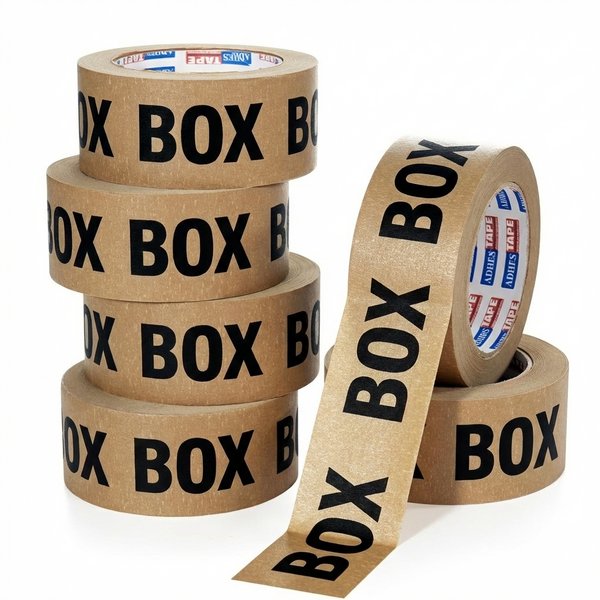
First, congratulations. How about Box Box Tape? It is good for packing boxes. What distinguishes it from ordinary packing tape is that ‘BOX’ is printed on its surface.
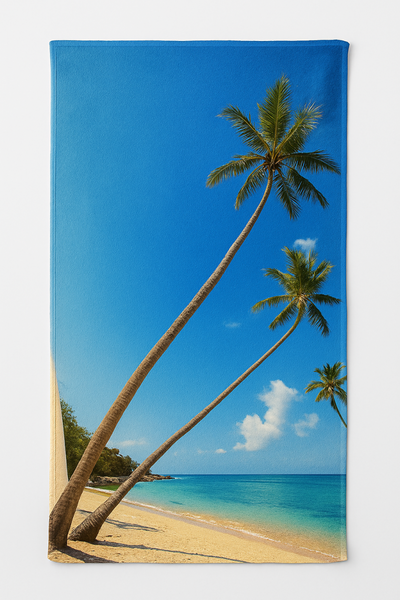
I also recommend Beach Beach Towel. Even in Daejeon, one of Korea’s best-known basins, you can imagine the seaside.
-
Thank you. Finally, is there anything you would like to say to the Yeonhui Literature Creation Village, which runs the webzine Biyu (비유)?
It is time for writers who use websites as their medium to take their rightful place in residence at the Yeonhui Literature Creation Village. Embracing websites as literature, in a manner worthy of literature, is another way for literature to link arms with “today.” That would be a path toward making something new, rather than a second or third Han Kang.
-
Then what is your favorite TV show?
That seems rather personal. I will tell you once we know each other a little better.
-
Hearing you mention self-reflexivity makes me all the more certain, as a curator, that you are an artist. I also agree that publishing no longer happens only on paper. Perhaps we should get used to a broader definition that includes any act of issuing information for public circulation. But unlike a printed book, much of what is published on the web can easily be changed, just as this interview remains open to revision and editing in Google Docs. Is that a good thing or a bad thing? Do we need shared rules, such as a requirement to indicate the edition?
“Self-reflexivity” could be a hashtag attached to Min Guhong Manufacturing. What drives it is “introduction.” Introducing something ultimately means making it widely known and connecting it with something else. This can lead to friends to spend time with (people), work to be proud of (a portfolio), and financial gains large and small (money). These three points rarely form an equilateral triangle, but is there anything as inescapable and sacred to Min Guhong Manufacturing as introducing itself?
In software terms, a website is a perpetual beta. If you want, it can be entirely different tomorrow from what it is today. The ability to revise content after publication may feel unfamiliar to someone accustomed to offline publishing. Conversely, someone used to online publishing may find the characteristics of offline publishing impractical. Rather than calling this good or bad, wouldn’t it be more practical to think about how to use this quality? Accurately recording when content was revised is important when running a website. But I also think we should treat websites as publications in our writing, just as we do printed books—including here, in this written interview on Google Docs. In Korean, this means enclosing a website’s title in double corner brackets (『』) or single corner brackets (「」), depending on its nature. It may feel a little awkward or cumbersome at first, but our attitude toward a publication as unexpectedly new as the website begins with small, seemingly trivial things.
-
View (보기), presented in 2016 at the project space on the third floor of the COS store in Cheongdam-dong, was organized by The Book Society and Na Kim. Each press of a red button displayed a randomly assembled message of warning or good fortune on a large screen. What is the most chilling message you remember?
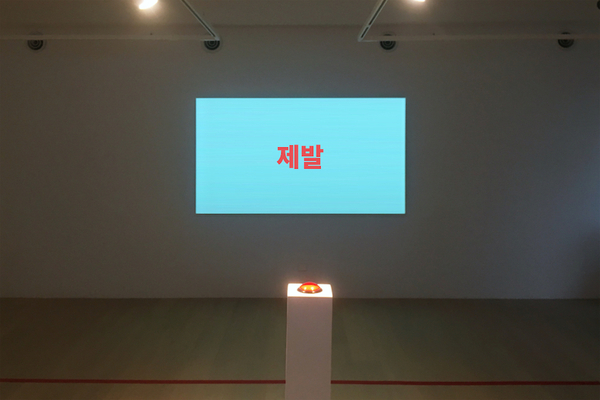
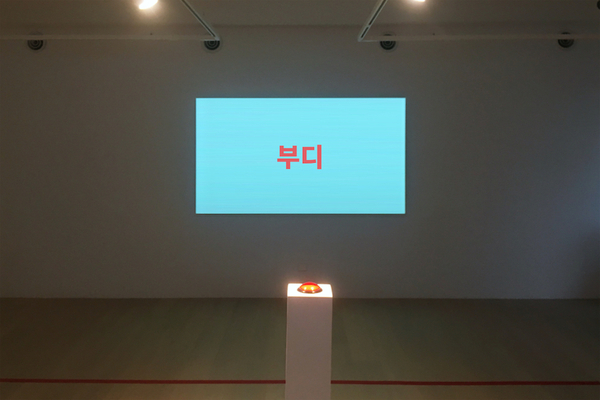
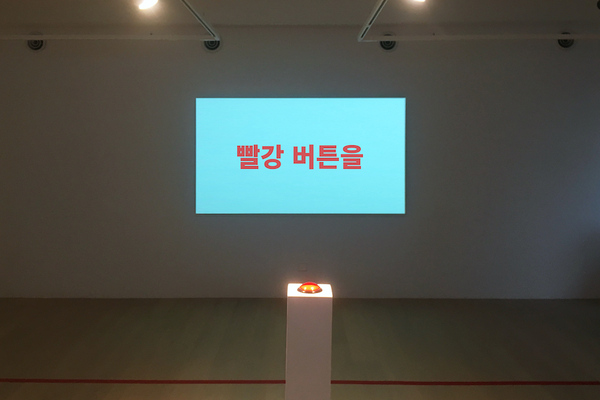
You / will suddenly / have to explain / your occupation / to an older relative / at Uniqlo. / Congratulations.
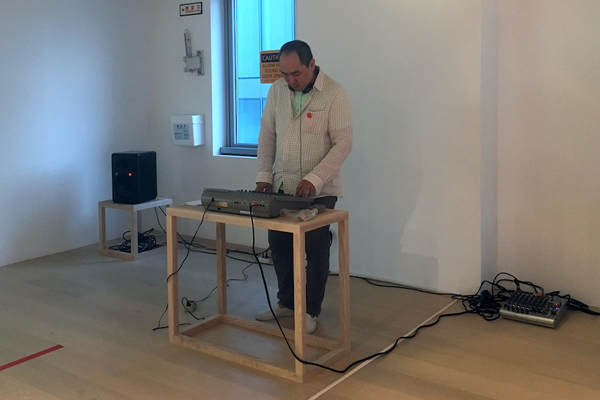
But the most chilling thing was probably not a message but the opening performance by musician Yoonkee Kim.
-
Order and tidiness seem to be second nature to you. Is disorder an accident for Min Guhong? Could you give an example of a disorderly situation you have encountered and explain the sequence in which you devise a response—or sometimes choose not to?
What interests me is not order itself but the process and manner of giving something order. Of course, in some situations I obsess over order to a ridiculous degree, but not everything can be edited into a perfectly tidy state. The National Institute of Korean Language’s attempts to replace every foreign loanword with a Korean alternative demonstrate this. However faithfully you try to follow a set of principles, a situation beyond your control inevitably arises that undermines them, forcing you to add awkward supplementary rules. So my desk and its surroundings, not to mention my home, are far from orderly. As with the web, where all kinds of content and technology mingle—or, closer to home, our own lives—it is better for your mental health to accept that a complete mess is the natural state of things.
-
Why did you later move to Ahn Graphics and begin running an ‘independent division of unknown identity’?
It was my fifth year at Workroom. I heard from Ahn Mano at Ahn Graphics: ‘Let’s work together.’ They were preparing for Ahn Graphics’ next stage, and I had hoped for an opportunity to contribute to the company that had brought me into design. That is how, with the title of ‘director,’ I came to take charge of an independent division of unknown identity called Ahn Graphics Lab, shortened and commonly referred to as AG Lab. In fact, my reason for deciding to move was trivial: the office was really close to my home. It is beside the park in Yeonnam-dong, Gyeongui Line Forest Park, a two-minute walk away. I have been running it for about a year now. I think AG Lab may be something like an add-on or plugin needed to upgrade the software called Ahn Graphics. Perhaps it would be right for it to fulfill its role quickly and disappear.
-
I am a student at the University of Seoul. When did you decide you wanted to do this kind of design?
Your question prompted me to think it over carefully. I think it must have been thanks to Choi Sung Min of Sulki and Min—more precisely, when I took on the translation of the Bob Gill book he recommended. This was around 2016, when I returned from the United States and moved to Workroom. The book says, ‘Interesting words need boring graphics.’ Conversely, it also says, ‘Interesting graphics need boring words.’
Above all, this probably means that the balance between the two—words and graphics, content and design, substance and form—is important. It neatly clarified something I had always thought about and, further, the nature of the works that had moved me. After that, I became absorbed in pragmatics, the idea that the same words mean different things in different situations, and naturally began looking for or trying to create situations that make words interesting.
Perhaps it is coincidence, but I wonder whether Ahn Sangsoo and Choi Sung Min designed me. In that sense, although I never formally studied under either, they are unquestionably my teachers. Sometimes I wish I could see them more often, but I think a suitable distance is necessary with such people. There has to be something left wanting for them to remain in your thoughts.
-
Meanwhile, net art has developed alongside the internet and the web. How has it changed through this process?
Emerging with the development of computers and the internet out of a desire for independence from established (art) institutions and bureaucracy, net art is inherently connected to anarchism. There are many questions and answers we could exchange about it, but today I would like to introduce a diagram on Wikipedia’s ‘net art’ page. Proposed in 1997 by the net art duo MTAA (M.River & T.Whid Art Associates), it shows two computers connected by a cable, with ‘art’ happening somewhere between them. It succinctly presents net art’s conditions and constraints: computers and connectivity. Look at it for a while, and you may begin to wonder what online today could possibly not be net art.
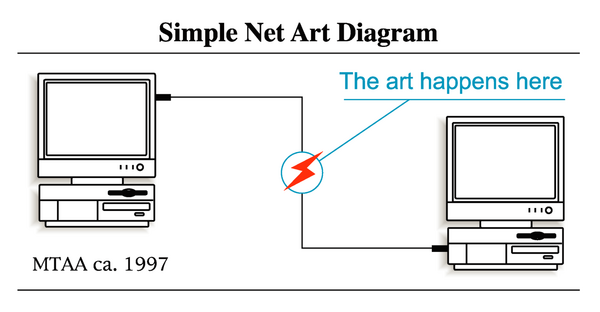
‘“Art” happens between two connected computers.’ MTAA, Simple Net Art Diagram, c. 1997. Image courtesy of the artists. © MTAA Let me search my memory for a moment. My first encounter with Korean net art was ‘Pibada Student Workshop (피바다학생전문공작소),’ run by Cho Kyungkyu and Bada. It must have been the late 1990s, when I was absorbed in ‘web surfing.’ Cho, now widely known for the webtoon Omurice Jam Jam (2010–), then published hardcore drawings and comics on his website and occasionally presented short films or electronic music. While studying in the United States, he ran an online radio show to share updates. You downloaded prerecorded audio files to listen, making it an example of actively using the web as personal media before YouTube appeared. Later, I saw Young-Hae Chang Heavy Industries’ Bust Down the Doors! at Rodin Gallery in 2004. Taking part in Fiction-Tool: Artist Publishing and Active Archives at Insa Art Space in 2018, organized by art critic and curator Lee Hanbum, I belatedly learned of works made around 2000, such as Kim Beom’s Utility Folder (2000).
-
Why do you call what the company produces “products” rather than “artworks” or “work”?
Since Kant, the illusion that language transparently reflects its object has been shattered. What matters is how a subject sees, defines, and, further, edits an object. Words such as “artwork” or “work” not only fail to reflect the circumstances in which things are consumed today; they add an illusion that obscures those circumstances. Since Min Guhong Manufacturing is a “company,” I thought “products” was a natural umbrella term for what it produces. Or perhaps I called it a “company” because I wanted to use the word “products.”
-
Come to think of it, we are reading this text through a website too. That would not have been possible without one.
In The Painter of Modern Life and Other Essays, Charles Baudelaire captured nineteenth-century Paris as it was transformed by industrialization and urbanization. I think websites play that role today. A website is a space that brings together not just technology and culture but philosophy and aesthetics. Sometimes it replaces reality like Jean Baudrillard’s simulacrum; sometimes it becomes a work of art with what Walter Benjamin called an “aura.” From Silicon Valley startups to avant-garde artists in Tokyo and social activists in Nairobi, websites have developed diverse forms and functions around the world in response to the situations they face. It is time to return to that place for a moment. There are worlds there we have yet to see.
To begin, shall we look at a web-based product from Min Guhong Manufacturing, the company I run? It is titled To You and belongs to the Love Letter series. Who exactly is “you” here, and what exactly is “this”?
-
That seems connected to why Min Guhong Manufacturing concentrates on introducing itself in various ways.
Exactly. An introduction is something you must make, and will have to make anyway, so I believe that act alone can set many stories in motion.
-
Could you define what Min Guhong Manufacturing does in three lines or fewer? I also wonder how you introduce it to someone hearing of it for the first time.
Perhaps because I introduce it in so many ways, including through the official website, I actually have fewer occasions to introduce Min Guhong Manufacturing than you might think. Conversations often begin with the other person already having some idea. How I introduce the company seems to change according to whom I am speaking to. At a meeting with Coca-Cola Korea a few days ago, I introduced it as a company that loves Coca-Cola.
-
I also found it interesting that, after infecting every vulnerable human and saving the world, you can print the peaceful world to fit a sheet of paper and save it. It felt like a certificate after completing life-or-death training, and offered the small pleasure of commemorating the result materially. Why did you choose this ending?
For viruses or humans, I wish saving the world could be as easy and simple as printing it out and saving it.
-
Where do you live?
Seoul, South Korea. It is also a potential prime target for Mr. Kim up North.
-
Another language makes the impossible possible. Suddenly I want to explore the history of websites.
That is a natural response. As you peel back layers of pixels to uncover the history of websites, you feel like an archaeologist of the digital age, discovering the cultural artifacts hidden within.
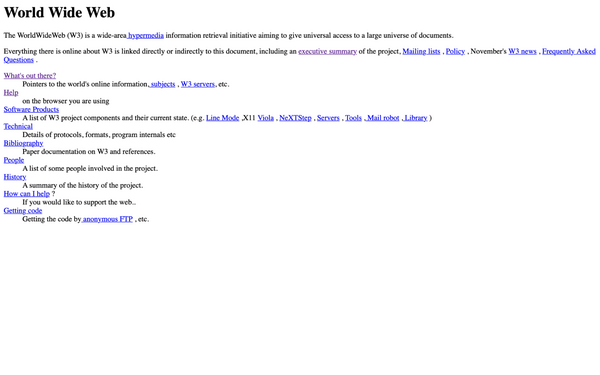
In 1991, the web’s creator, Tim Berners-Lee, made the first website to introduce the World Wide Web. It is my favorite website—indeed, the one I love most. It may look modest and simple by today’s standards, but it signaled the beginning of a digital revolution. Like Johannes Gutenberg’s invention of movable-type printing, it heralded the democratization of information. More than thirty years after its release, it still works with its original look and feel. Faced with this website, who could confidently claim that websites are less durable than printed books?
-
Could you name a few books related to this event at COS?
- Audiovisual Pavilion Documents 1–[80]
- Index Card Index 1
- Shopping in Prison (감옥에서 쇼핑하기)
- Uncreative Writing
- A Spanish Play
- Post Internet
- Forget all the rules about graphic design. Including the ones in this book.
- Self-Study Guide (자습서)
- BIC Catalog
- 3M Catalog
- Uline Catalog