From Ga to Hih
Hangul, announced in 1443 by Yi Do (李裪, 1397–1450), commonly known as King Sejong, is a writing system for Korean. After more than two years of beta testing, it was first introduced to the public in 1446 through Hunminjeongeum (訓民正音). Meaning “the correct sounds for instructing the people,” Hunminjeongeum was also the name of Hangul’s first version. Combining nineteen initial consonants, twenty-one medial vowels, and twenty-eight final consonant positions, the system can generate a remarkable 11,172 syllables, from “가” to “힣.” Beginning with Yongbieocheonga (龍飛御天歌) in 1447 and continuing through Hong Gildong jeon (洪吉童傳), Hangul has joined spaces, periods, and other special characters to generate countless pieces of content, including this text, for nearly six hundred years.
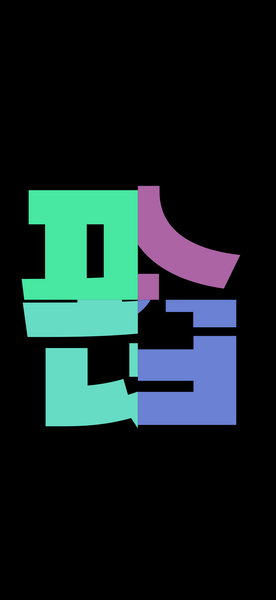
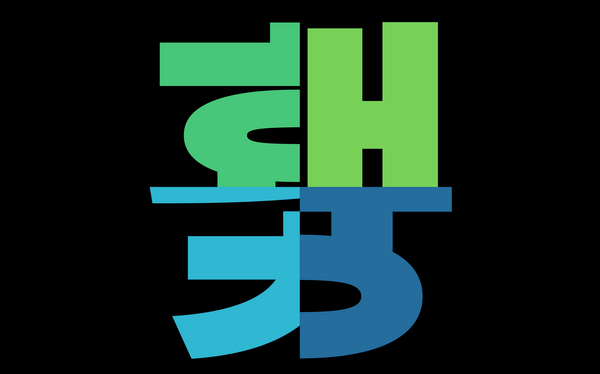
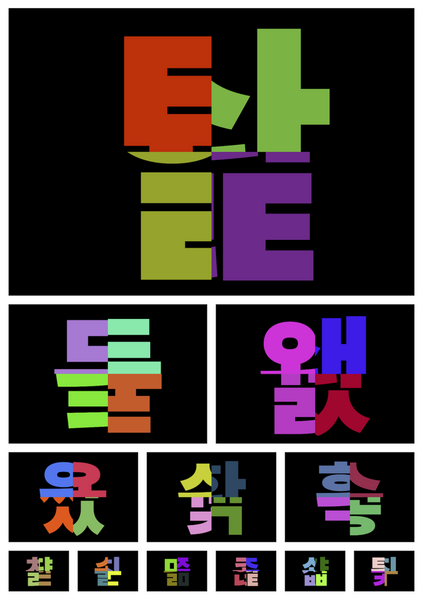
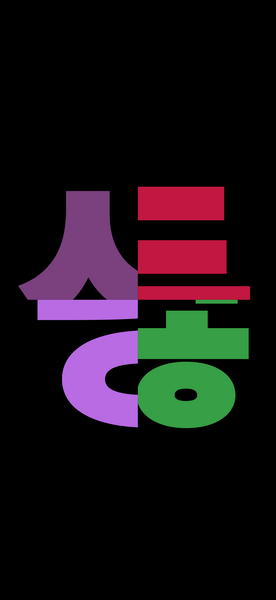
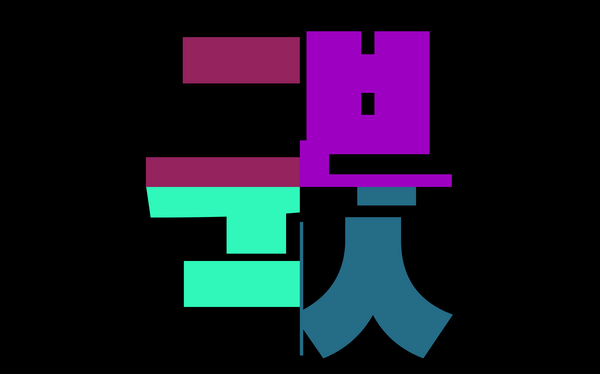
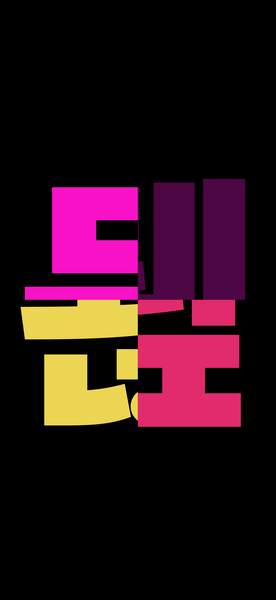
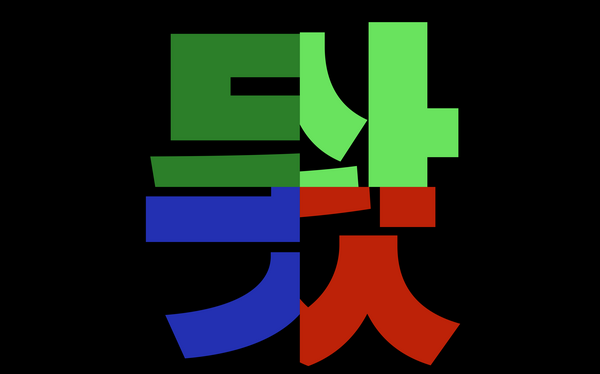
Min Guhong Manufacturing’s new product From Ga to Hih, presented in this exhibition, gently explores the relationship between text and image through Hangul. It randomly combines four of Hangul’s 11,172 syllables with the 16,777,216 colors that can be displayed on screen, generating an image at 0.25 hertz. If you have sharp eyes and love Hangul, you may discover your own words here: “사랑” (love), “증오” (hate), “민구홍” (Min Guhong), or “매뉴팩처링” (Manufacturing), for example. Built with web technology, it runs forever unless someone exercises the power to close the browser. The typeface is Pretendard, developed, or edited, by Gil Hyeongjin.
Meanwhile, British designer Paul Elliman wrote about typography in “My Typographies,” published in the spring 1998 issue of Eye Magazine: “Writing gives the impression of things. Conversely, things can give the impression of writing.” Edited in the manner of Min Guhong Manufacturing: text gives the impression of images. Conversely, images can give the impression of text.
Submitted to the first Oesol International Typography Competition. Winner of a Granshan Award.