New Order
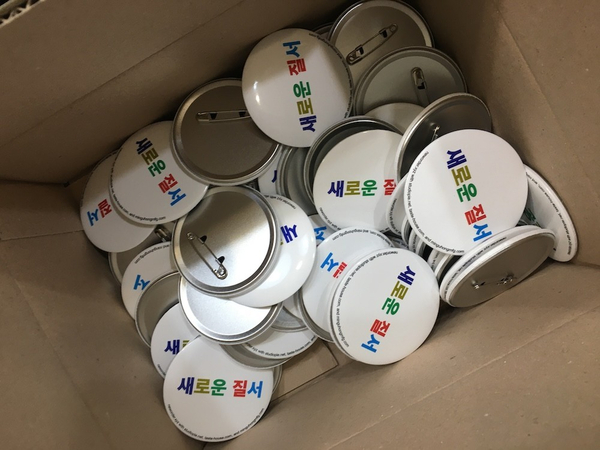
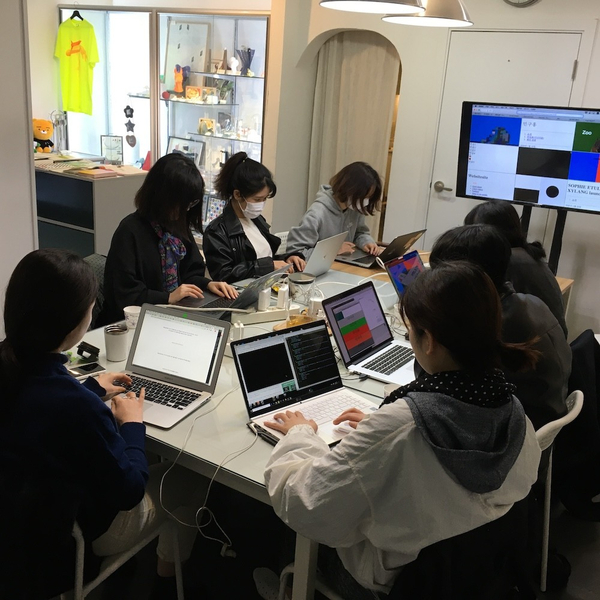
“When you like something and eventually come to love it, you naturally want to share that beautiful feeling with those around you.” New Order began at an informal workshop held at the graphic design studio and publisher Workroom on the day after Christmas in 2016, following Min Guhong’s return from the United States. Since 2019, it has grown with the generous support of PIE, run by young artists. Occasionally joining hands with educational institutions including Seoul National University, Paju Typography Institute, Korea National University of Arts, Hongik University, Fruitful School in the United States, and Princeton University, as well as art institutions including the National Museum of Modern and Contemporary Art, Ilmin Museum of Art, and Seoul Museum of Art, it has welcomed nearly 500 friends so far. Among them, web-based collectives such as “After New Order” and “Some Order” have emerged as new orders of New Order, while some friends have discovered talents they did not know they had and changed course toward literature, art, design, photography, cooking, and more.
Liberal Arts Classes for Modern People
Today, we encounter countless websites. As the web grows ever closer to everyday life and, in some respects, has already replaced it, understanding and reflecting on the web and making a website of one’s own are things anyone living today might try. The web is not the exclusive domain of developers, UX and UI designers, net artists, or any other particular profession, nor should it be. This is why New Order calls itself, above all, “liberal arts classes for modern people.”
Handmade Web
Since the web became publicly available in 1991, making websites has grown increasingly complicated and distant from us. Drawing on the spirit of the “Handmade Web” emphasized by first-generation net artist J. R. Carpenter, New Order explores websites that are simple, light, and functionally beautiful. Broadly divided into sharing—lectures, conversation, and critique—and practice—writing and revision—the course uses the web’s fundamental computer languages, HTML, HyperText Markup Language, CSS, Cascading Style Sheets, and a little JavaScript, as tools for giving ourselves a new order over six weeks. Making a friend of failure, we learn to take the lead as the medium changes at each stage, while answering the following questions together or on our own.
- If working with computer languages as tools—coding—is another form of writing, what might the result be?
- Beyond portals, shopping malls, archives, online posters, and leaflets, what can a website be?
- What are the characteristics of the web, and how can we use them in everyday life?
- Why should we make websites?
- Should we readjust our existing Instagram posts to a 3:4 ratio to follow its changed policies? Can we go further and live outside Instagram?
- Can we become friends with generative AI such as ChatGPT?
- What can we do to make the web a more enjoyable place?
- How much can the web contribute to my happiness, and to ours?
The First Assignment
The first assignment in New Order is as follows.
A blank page now lies before us. The moment we see it merely as something to fill, the blank page becomes an obligation. But if we can discover something already there, it becomes a finished work in that instant. Explore how to make everything possible by doing nothing before a blank page. If you succeed in this challenge, you may leave New Order right away. But if you fail, or cannot suppress the desire to fill the page, move on without hesitation.
For Reference…
New Order has some connection to how the British band New Order, successor to the post-punk band Joy Division, got its name, and somewhat less connection to the “New World Order” of world-government conspiracy theories or the professional wrestling team New World Order, nWo.
Every Friday, except public holidays, is “New Order Day.” The weekly outline follows. All you need is a personal computer, laptop or desktop, healthy fingers, and an open mind.
Week 1: From Today, We
We introduce New Order through New Order, published by Mediabus in 2019, and introduce why “introduction” is problematic. We look at the histories and characteristics of computers, the internet, the web, websites, and the computer languages we will use: HTML, CSS, and JavaScript. We consider a few requirements and attitudes necessary before assigning a new order, and learn to use key programs such as web browsers and text editors. We collect words around us, redefine them through ourselves as filters, and give ourselves a new order. “Each of us needs a dictionary of our own.”
Week 2: HTML, for Context and Structure
We look at the previous results together and revisit Week 1. We establish a space of our own on the web outside social media, learning the proper and practical file and folder management this requires. We learn to read and write HTML, which gives content context and structure, and give our previous results a new order. “The true purpose of travel is not to seek new landscapes, but to gain new perspectives.”
Week 3: CSS, for Design
We look at the previous results together and revisit Week 2. We learn to read and write CSS, which gives content micro- and macrotypography, animation, and interaction, and give our previous results a new order. “Curiosity is continually knocking on a door, and thereby discovering that it is already open.”
Week 4: JavaScript, for Function
We look at the previous results together and revisit Week 3. We learn to read and write JavaScript, which gives content functions, and give our previous results a new order. “Technology is the answer. But what was the question?”
Week 5: A New Order for New Order
We look at the previous results together and revisit Week 4. We learn other ways to read and write HTML, CSS, and JavaScript, and give our previous results a new order. “If you hold on to a question and do not forget it, one day you will find your way into the answer.”
Week 6: An End or a Beginning
We conclude New Order by sharing the results of giving ourselves a new order over six weeks. But in New Order, “end” and “beginning” are differently sounding synonyms. “Someday, somewhere, I shall tell with a sigh that two roads diverged in a wood, that I took the one less traveled, and that has made all the difference.”
Notes
Each class comes with a small but important assignment. The content and order of classes may change depending on the circumstances.