Rainbow Sherbet
A Proposal from Min Guhong Manufacturing
I should begin by asking the reader’s patience: the contents of Rainbow Sherbet are very difficult to explain in a single phrase. Or perhaps I could put it this way: if this book can be explained in a single phrase, Rainbow Sherbet may have failed at a fundamental level.
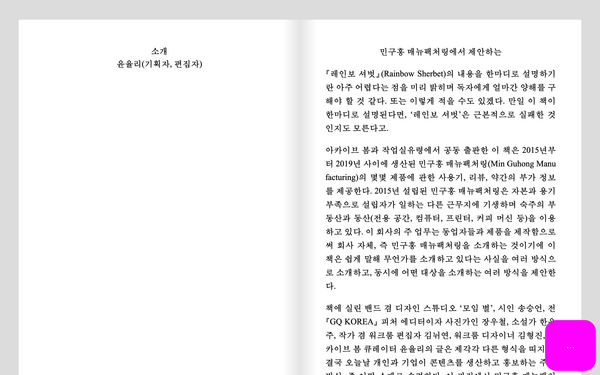
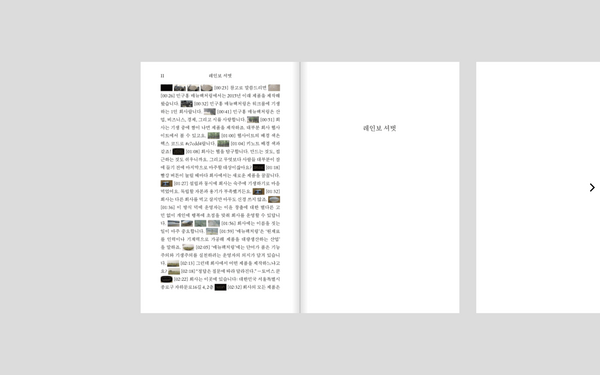
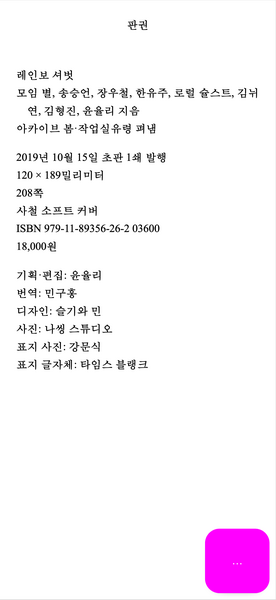
Copublished by Archive Bomm and Workroom Press, the book provides accounts of use, reviews, and a little additional information about some products made by Min Guhong Manufacturing between 2015 and 2019. Founded in 2015, the company lacks the capital and courage to stand alone, so it lives parasitically at its founder’s other workplace, using its host’s real estate and movable assets: dedicated space, computers, printers, a coffee machine, and so on. Since the company’s main business is introducing itself—Min Guhong Manufacturing—by making products with collaborators, this book, simply put, introduces in various ways the fact that something is being introduced, while proposing different ways of introducing something.
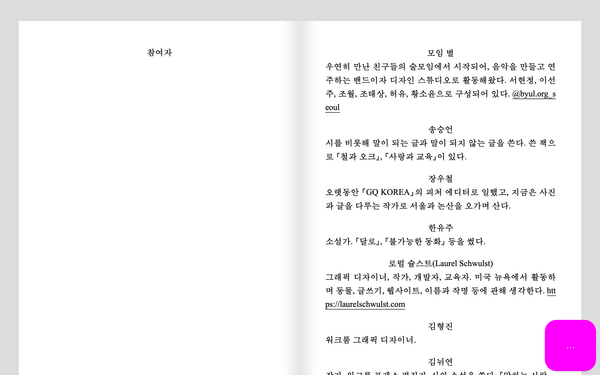
Contributions by the band and design studio Byul.org, poet Song Seungeun, former GQ KOREA features editor and photographer Jang Woochul, novelist Han Yujoo, writer and Workroom editor Kim Nuyun, Workroom designer Kim Hyungjin, and Archive Bomm curator Yoon Juli each take different forms. Ultimately, however, they converge on the main way individuals and companies produce and promote content today: an introduction of some kind. In this process, Min Guhong Manufacturing becomes transparent as air rather than clearly visible.
A Practical Guide to the Contemporary
In the fall of 2018, Min Guhong Manufacturing held Rainbow Sherbet, an exhibition introducing the company, curated by Yoon Juli at Archive Bomm, a gallery in Yongsan-gu. This book is also a means of recording, or extending beyond, the exhibition of the same name, which may have been closer to an event, a trade fair, or a keynote. Inevitably, the book acquired a somewhat complicated structure: introducing the exhibition, introducing what the exhibition sought to introduce, and introducing the company that introduces itself through what the exhibition sought to introduce.
Some readers may hear this circular reasoning as a bad play on words. But what if such paradoxes are everywhere around us, like the term “editing” today? Advertising, consulting, personal branding, investment advice, design, contemporary art, blogging, YouTube content planning, architectural competitions, evangelism for new religions, poetry writing, and the multilevel marketing we encounter on the street every day: it is not difficult to imagine this unsettling hypothesis in any of modernity’s excessively specialized fields. Might the true content lie in the editorial disciplines of the electronic signs, broadcasting systems, layouts, templates, platforms, boilerplates, exhibition spaces, institutions, greetings, prefaces, or the space between <head> and </head> in which they are situated?
If someone decides to join this wicked intellectual conspiracy, Rainbow Sherbet will surely offer far better value as a guide than an expensive MBA program. Or at least it will make them feel that way. A guide to the contemporary, and above all to the business called the contemporary.
This Book’s Practical Side
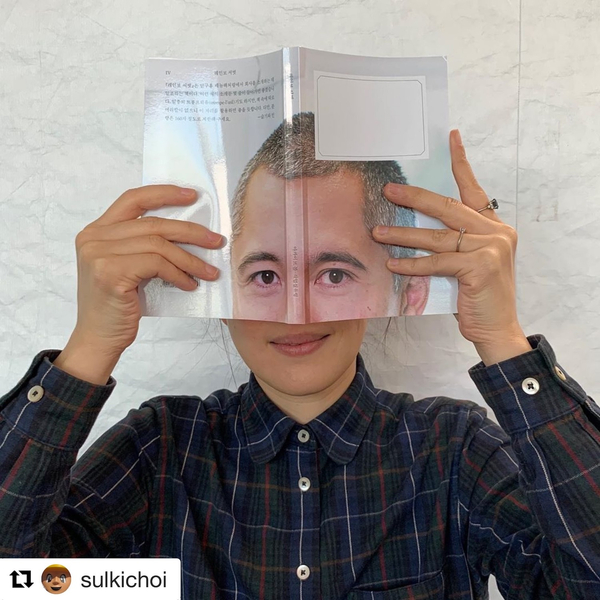
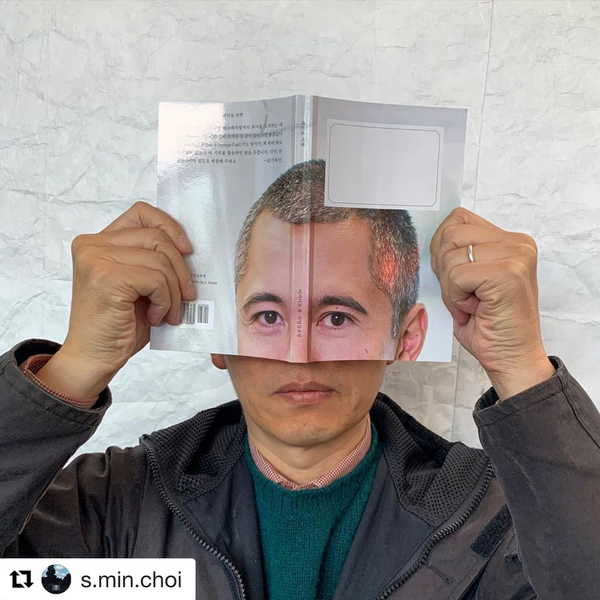
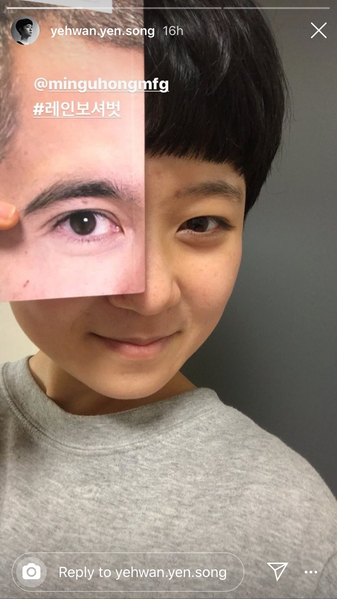
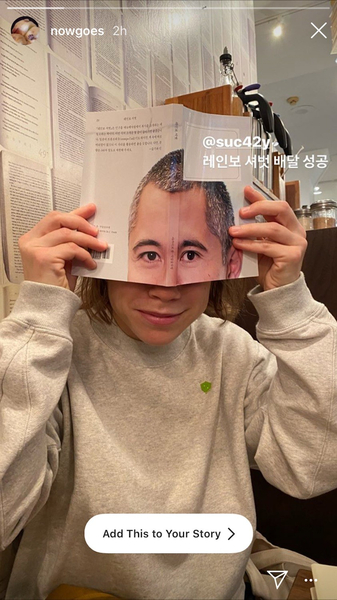
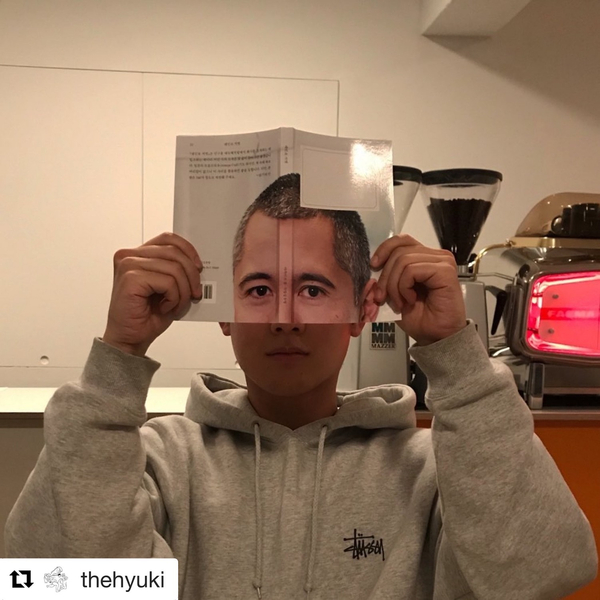
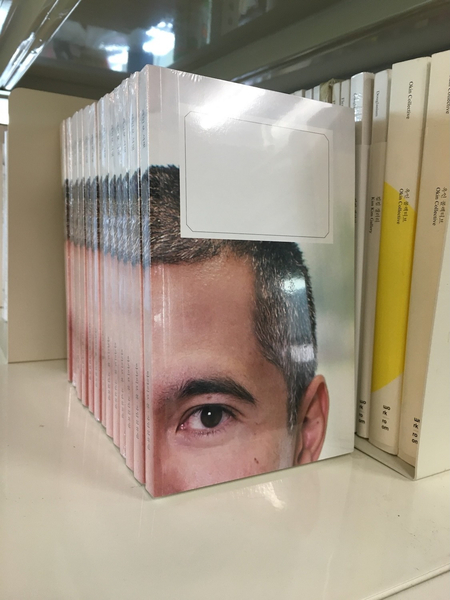
Sulki & Min, who designed the book, used a portrait discovered by Gang Moonsick, the designer of the Rainbow Sherbet exhibition, for its cover. The face was scaled to the average Korean face size—23.6 centimeters from the crown to below the chin—and cropped appropriately, so opening the book to read turns it into a kind of mask. It is therefore also useful for taking selfies to post on social media. In various ways. #레인보셔벗
Rainbow Sherbet is the most physical object Min Guhong Manufacturing has made to introduce itself. It is also its most immaterial company introduction. Some call it a “product,” others an “exhibition catalog,” and others an extension of a simple joke. None is wrong. Yet if the book can be explained in a single phrase, that may signal its failure, just as Min Guhong Manufacturing cannot be defined succinctly.
Rainbow Sherbet contains accounts of use, reviews, reflections, and a little additional information about some products made by the company between 2015 and 2019. Though called products, these mostly consist of letters, websites, exhibition posters, doubts, and reasons why business cards could not be made. Befitting a company that lives parasitically on a host for lack of capital and courage, the book, too, entered the world by borrowing the strength of Archive Bomm and Workroom Press.
In short, this is a book that introduces “the act of introducing a company” in different ways. A book introducing introduction. This also means that “introduction” is difficult to define through a single tone or form. What is an introduction? Colleagues including Song Seungeun, Jang Woochul, Han Yujoo, Kim Nuyun, Kim Hyungjin, and Yoon Juli participate and answer in their own ways. Their sentences and images recall the company differently, speak of it, and remain silent about it. Between speech and silence, the company gradually becomes transparent rather than clearer. Like air.
Yet the book is not simply a commemorative collection of people and sentences. A book made to introduce an exhibition introducing a company, it has a structure that introduces the company again through the exhibition and the book. Rainbow Sherbet (Archive Bomm, 2018), curated by Yoon Juli, was an experiment in turning the company introduction itself into an exhibition. While explaining that exhibition, this book again introduces the company in the manner the exhibition intended. It introduces the exhibition, introduces how the exhibition sought to introduce, and appends the whole cycle of introductions in book form. A kind of multilevel-marketing book, one might say. In itself, it is a contemporary editorial practice and a cheerful rumor about the self-introduction industry.
The book is more than theoretical play. It is surprisingly practical. Its cover, designed by Sulki & Min from a portrait discovered by exhibition-poster designer Gang Moonsick, is cropped to the average Korean face size, naturally covering the reader’s face like a mask when held open. A selfie of someone holding the book automatically becomes a campaign introducing Min Guhong Manufacturing, accompanied by the hashtag #레인보셔벗. In other words, the book may be a presentation in an exhibition, a template, or a consulting report. In short, it is an object made of words and a practical casebook on the various industries of “introduction” operating today under the names of branding, art, advertising, editing, and content planning.
Some readers may find this structure an exasperating joke. Yet such circular structures are already found throughout contemporary industry. “Introducing introductions, and introducing ways of introducing” is now a common practice, from advertising, blogs, curation, YouTube, and artist statements to the HTML <head> area, exhibition-opening greetings, and government-report cover designs. Rainbow Sherbet enters this phenomenon and turns it into a product, the product into a book, the book into a mask, and the mask back into text. That is why Min Guhong Manufacturing no longer prints this book. Instead, it says:
“Min Guhong Manufacturing does not clear out its stock of Rainbow Sherbet.”
If a few copies already shipped exist on someone’s desk, shelf, or in a selfie, that is enough. Perhaps this is a book one comes to possess in some way rather than understanding its contents: a book that operates through attitude more than content. That attitude leads Min Guhong Manufacturing to introduce itself again today.