To Whom It May Concern
To Whom It May Concern
Kim Sungwoo (Curator)
This exhibition is a kind of letter to an unspecified recipient. The sense of drawing on the exhibition format to write a letter is an approach adopted to introduce a “one-man parasitic company” where the exhibition format would not be welcome: Min Guhong Manufacturing. The letter style is a form of deception; what matters is the introduction. Min Guhong Manufacturing has been parasitizing the exhibition form to some extent since December 17, 2022. Primary Practice is a place (or printed surface) provided so that this parasitic stance can assume some minimal form at the conscious level. In that sense, the use of the “letter-writing form” is an expression of the intent to introduce the company to undefined subjects—as many recipients as possible.
Attitude and form
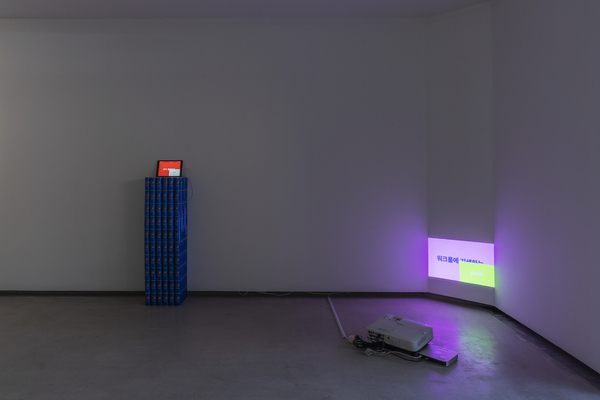
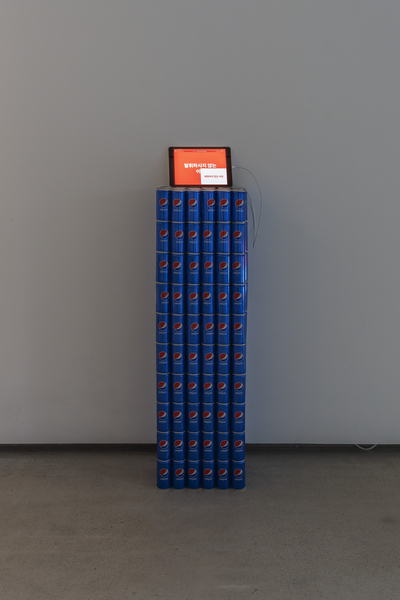
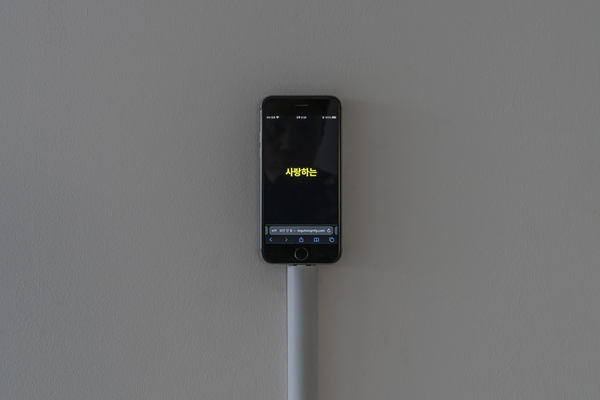
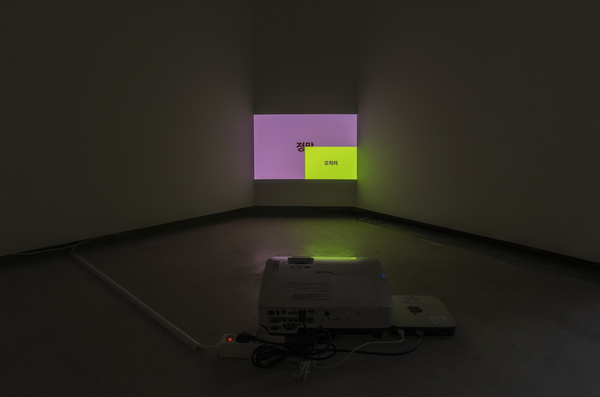
“Parasitism” is an attitude that Min Guhong Manufacturing has adopted. As ever, parasitism has the effect of making the company seem larger at some point. The parasite takes on some suitable place under the fence, attaches to its host, and lays down roots; in those settings where the host’s movements and actions stand out, the company’s presence rises up alongside it. As with art, the strategy is one of expansion through a reliance on symbolic value rather than immediate profit. This may be described as a process of acquiring symbolic capital in order to establish a name through knowledge and recognition. But when it comes to sharing the host’s position and increasing the company’s value, not just any host will do. The size and image of the parasitized organization take on some importance. Mere size is not necessarily a good thing, and meaning alone doesn’t make ends meet. Viewed in terms of artistic language, the parasitism of Min Guhong Manufacturing is a form of appropriation. Min sends business emails from his company to Young-Hae Chang Heavy Industries (Dear Young-Hae Chang Heavy Industries, 2020–). But he runs into difficulties with the letter’s main thrust—its narrative—and loses the plot as elaborations constantly intrude, taking up a quarter of the screen. Once we get past the clutter of the language, what remains are a rhythmic text on a screen that glows (a Young-Hae Chang Heavy Industries trademark) before reaching the recipient and an “adequate” introduction to the company, achieved through a process of constant elaboration and deferral. Young-Hae Chang Heavy Industries makes for as good a host as the position it holds in the artistic world. The same method is carried over into a sponsorship letter sent to Coca-Cola Korea (Dear Coca-Cola Korea, 2022–). Fortunately enough, the rejection received from the target solicited for a business venture (or the letter that has lost sight of its aim) has the effect of making the company’s narrative seem even more dramatic. The status is subverted, and the symbol is altered toward a different meaning and value.
Questioning and negating
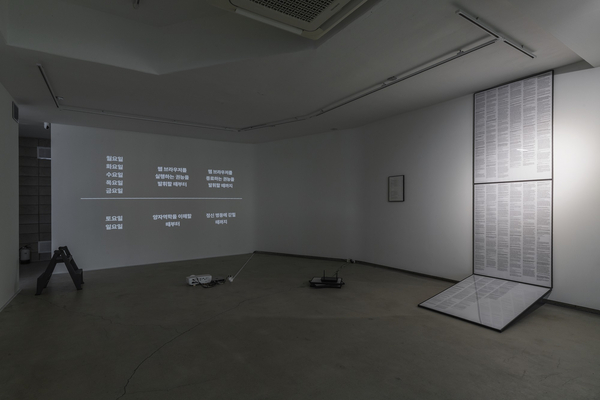
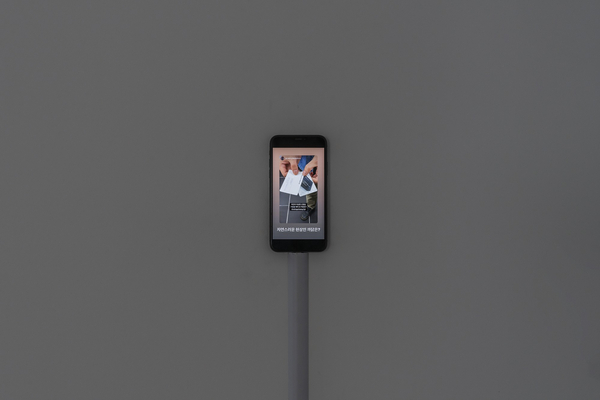
Min Guhong Manufacturing is a rare example in how often it asks questions. The company assembles questions from all around, along with texts and answers posed to the company itself, and lays them out on the page (Frequently Asked Questions, 2022 ver.). The conclusions of this mass of text—the questions without context, the somewhat posturing responses, the occasional use of other people’s words to refer to the company—all return compulsively to “Min Guhong Manufacturing.” This clearly shows how the self-reflective character of Min Guhong Manufacturing and all its activities center on introducing the company. At times, the questions are directed outside the company. The queries posed endlessly through Instagram stories seem pointless and difficult to answer (…the Reason?, 2022). Fascinatingly, as the company’s questions treat everyday moments that are occasionally encountered in life as if they were “events,” the unknown viewer focuses on them as though they must be answered—yet in the end, they reach the point of a wondrous Zen riddle, where they are the ones asking themselves the reason. In chipping away at everyday expressions with gestures of affirmation, our social media have created an era of over-affirmation; within this climate, Min Guhong Manufacturing strives over and over to negate. In introducing itself, the company mentions only what it “doesn’t do” rather than what it “does” (About the Company, 2015). The approach of defining oneself solely in terms of what one doesn’t do makes it impossible to approach that subject; the result is a repeated sliding away from a clear definition of the company. Yet this gesture also makes it possible to escape a realm of unitary rules and order surrounding the company. In a sense, the questioning and principles of negation that give rise to the difference and deferral also help us to understand aspects of the world. It is an approach of picking at the things we think simply “ought” to be, pausing in a fast-turning world to focus the perspective on what others pay no mind to. The result brings us face-to-face with an order to the world that is constantly bobbing up and down over the surface of phenomena—as though drawn into a form of play with différance.
Gallery space and digital display
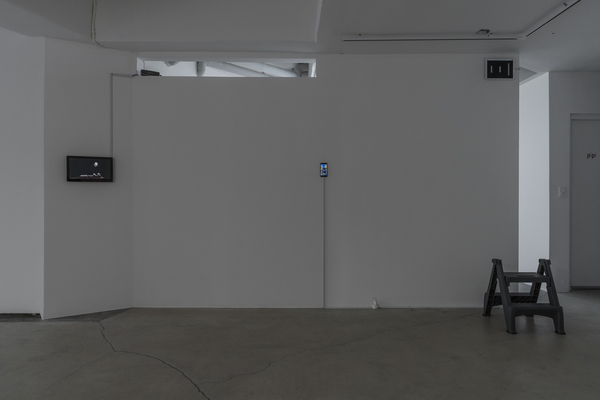
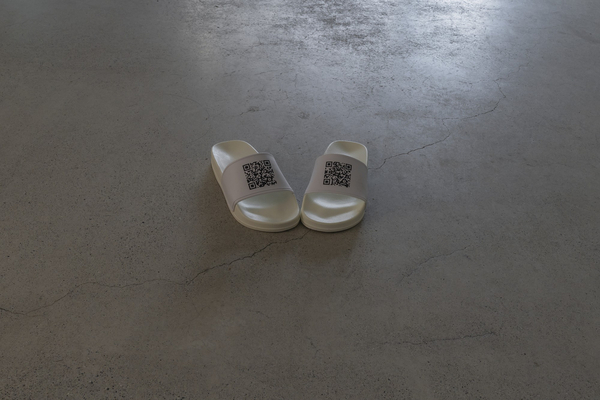
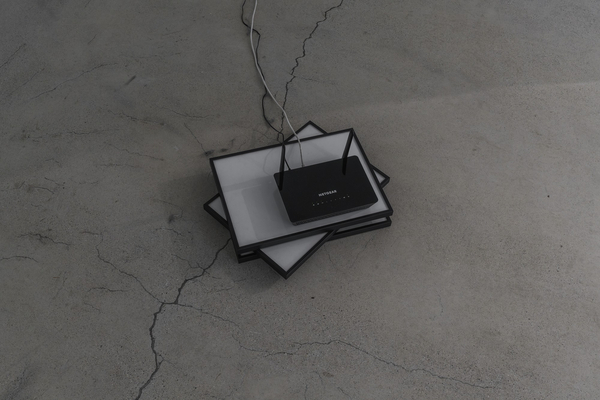
The web is the basic setting for Min Guhong Manufacturing’s activity. Encompassing everything from website creation to software development, design, and editing, most of the company’s activities are structured around the limitless connective possibilities in the vast world that online environments provide. A freedom that transcends time and space alternates between the practical and fantastic, in what generally leads into the construction of some kind of website. Along these lines, the first space assigned to Min Guhong Manufacturing is the digital device display. The specifications of these displays represent a surface for texts whose frames are constantly being varied. The company adopts a system that allows information to be supplied effectively to meet different specifications, from mobile devices to computers, with times and depths designed as images, videos, and texts are arranged in defined sequences and orders. Depending on the specifications and formats of the main device or online platform, these might be constructed into flat, one-dimensional forms or into leveled spaces. But while the online environment is infinite, it also faces certain physical constraints based on the type of digital display or program. Fortunately, there are link- and search-based connections to the next information, which allow us to imagine limitless routes. But the pre-designed structure does not display the world outside the screen from the start, so that we can only select a portion of the information from within the iceberg’s tip. In this way, the images and information are altered and the method and conditions of their exposure are governed according to the given rules. This makes them similar to the structure of the exhibition (gallery), as represented by the so-called “white cube.” From the basic conditions of the gallery (the walls where the artwork hangs and the lighting that illuminates it) to the exaggerated installations that visualize the desire to pin the exhibition down in the realm of the visible, the perspective gradually narrows, the gaze not imagining but resting on the immediate represented surface. As if to mock these robust physical structures, Min Guhong Manufacturing imagines instead an escape by way of digital devices. In the Wi-Fi sharing device (Regardless of Space, 2022), the wireless internet IDs “from anywhere” and “regardless of space” represent a space that is not constrained by space, one that seeks to exist anywhere and everywhere—an accessible space that exists outside of physical systems. Just as the exhibition format weaves a nonlinear narrative while it alternates and connects among the different images, Min Guhong Manufacturing presents itself as a company that can exist everywhere: an open document beyond closed space.
Medium and methods
For Min Guhong Manufacturing, medium is text, while editing is both a unique creative methodology and linguistic grammar. Depending on the clients’ demands, the company often performs different roles: from designer to program developer and editor. As a company that is actually capable of taking on customized duties for different situations and conditions, it always leaves open various professional possibilities besides these. In To Whom It May Concern, it assumes the role of editor. Min Guhong Manufacturing takes the exhibition (gallery) as a book, page, or website to be edited. When it comes to bringing in an audience through the use of letters, it is important for the composition to take welcoming and services into account. In that sense, it is essential to have editing techniques that reflect user convenience. A decision has to be made on which of the various items produced to date should be used for content, and for all forms, the attainment of certain functions and goals must take precedence over the sense of aesthetic satisfaction with the outward appearance. This is to say nothing of a sense for the text: the typeface and size decisions, the layout when it appears on a page or in video, and the resulting visibility and readability must all be carefully considered. Displaying these painstakingly selected items is like another form of editing. As the chosen content is transported to an individual device or frame, where it is laid out and arranged in space, a kind of narrative is imagined. Ordinarily, content can be emphasized in a simple way by having equal margins on either side, with the items placed along the center line. After this linear arrangement, it is re-mixed, scrambling the logical narrative, while the spaces between the lines are adjusted for a sense that precedes linguistic interpretation. Editing becomes like a form of curating. It involves coordination and adjustment—sometimes friendly, other times discomforting. Rather than fixating on individual written characters, this involves forms as masses on the page and video images that generate a sense of rhythm. Through this labor on the customer’s part, the text helps them reach a realm of imagination: another question.
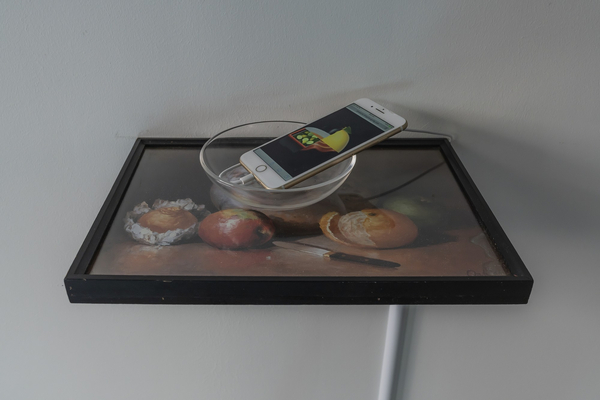
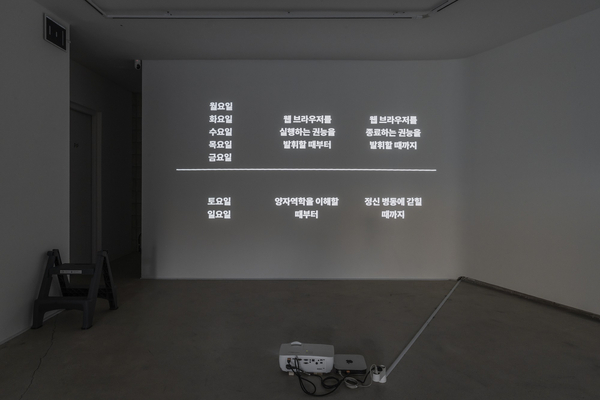
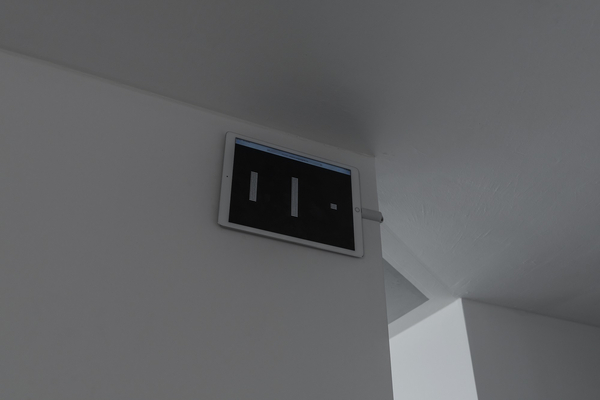
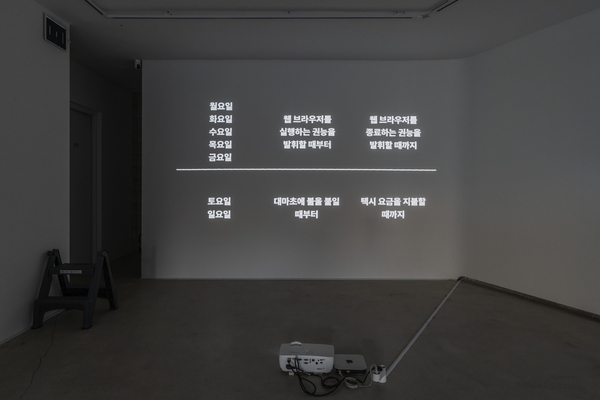
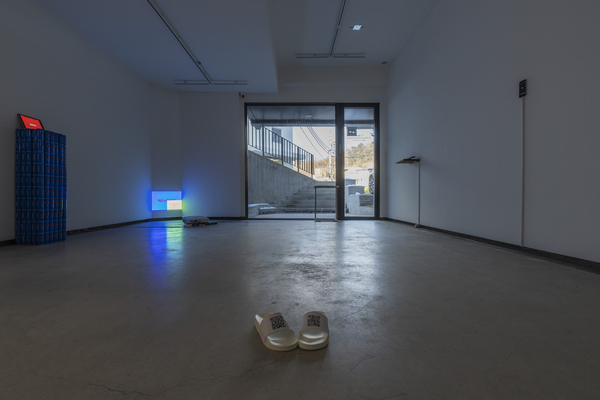
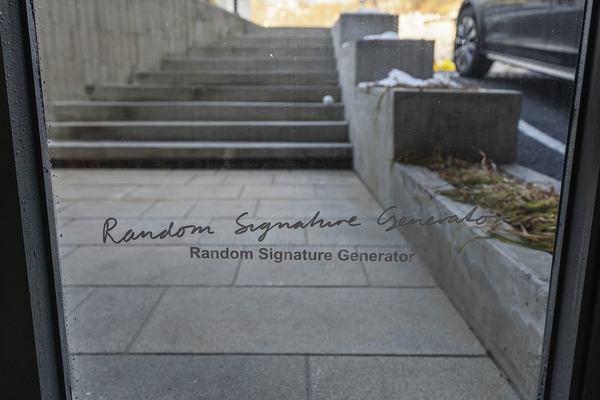
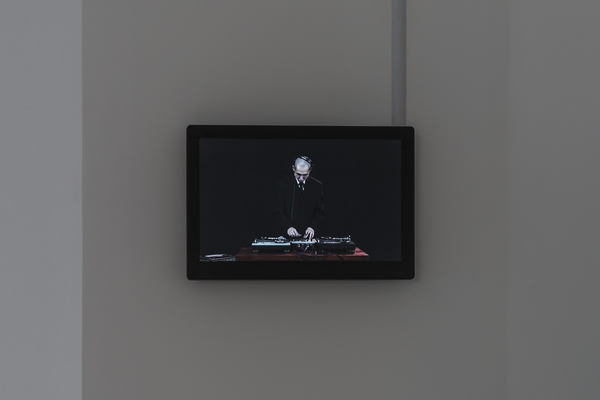
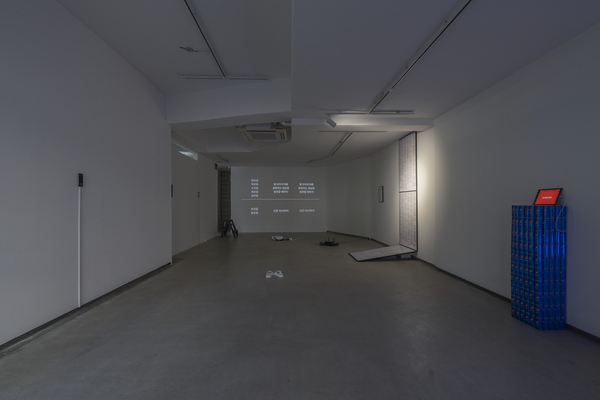
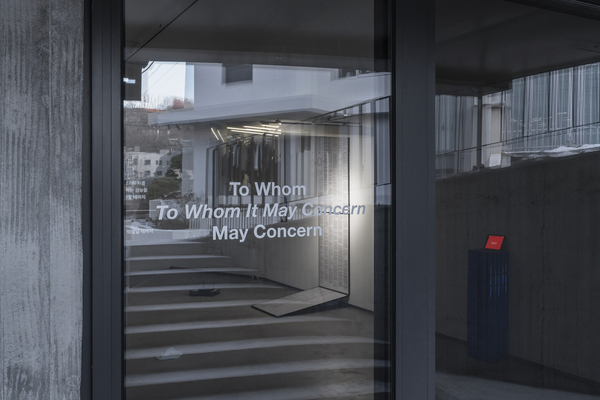
As I mentioned before, this exhibition is an affectionate letter sent To You (2022 ver.). Min Guhong Manufacturing has assumed a posture of welcoming whomever it may concern at the entrance (To Whom ‘To Whom It May Concern’ May Concern, 2022), placed suspicious fruit at the door as a cordial welcome to some picky customer (viewer) who is visiting in reply to their letter (In Consideration of the Picky Customer, 2022 ver.), and even turned on some lively background music (Whenever and Wherever You Need a DJ, 2018). It has kindly provided an enlarged listing of the operating hours (Operating Hours, 2022 ver.) and hung a smaller clock on the wall so that the visiting customer can rest easy spending their time in the place of business (Since Numbers Aren’t All That Important, 2022 ver.). It has even offered a service titled A Random Signature That a Random Signature Generator Generated (2022) on the way out in the hopes that the visitors might become interested future customers. The company eagerly hopes that those who took the trouble to answer the letter and visit can imagine the infinite things that exist between “nothing” and “anything.”
I understand that titles matter so much to you that you will not release a work whose title you dislike, even when everything else is finished. What does this exhibition’s title, To Whom It May Concern, mean? Could you also introduce the exhibition as a whole?
“To Whom It May Concern” is a somewhat dated expression used at the beginning of an English business letter when it is difficult to identify the recipient. Literally, it means something like “to the person concerned,” but given a little moisture and room, it becomes “to someone who might be interested.” As the title suggests, this exhibition is like an announcement from Min Guhong Manufacturing to someone who might be interested. Making an exhibition is similar to making a book in that it highlights something, makes it widely known, and connects it to something else. Here, the editor would be the curator. The curator treats the artist as content and steers them this way and that. Having worked as an editor myself, the curator’s opinion matters to me. I simply followed curator Kim Sungwoo’s instructions, either observing the rules he devised or breaking them down. That is how the title came about too. It offered the possibility of wordplay such as “To Whom To Whom It May Concern May Concern,” which could make things a little difficult for the curator. Actually, whenever planning an exhibition, I always suggest the same title: “How about calling this one ‘About the Company’?” But it is rejected every time for various reasons.
Unfortunately, we are speaking after the exhibition has ended. Looking at it as another visitor yourself, what were your personal impressions—unexpected reactions, memorable episodes, regrets, or things that gave you more encouragement than expected?
I unexpectedly received a reply to Dear Messrs. Coca-Cola Korea. Near the end of the exhibition, I met people from Coca-Cola Korea and heard their impressions. They also gave me business cards and gifts printed with the Coca-Cola logo. The exhibition could reach people in various ways thanks to introductions by Kim Sungwoo and Primary Practice. People also sent meaningful responses to my Instagram account. There are countless exhibitions—that is, stories—in the world. I can only use this precious opportunity to thank everyone who listened to one of them. I hope this feeling reaches people widely, even if I cannot convey it to everyone individually—in other words, I hope this conversation is widely read.
I understand that you met visitors at the exhibition on its final day for questions and answers. Was there a memorable question?
Min Guhong Manufacturing’s official website has a section called Frequently Asked Questions. It consists of questions I have received and my answers; on the exhibition’s final day, I essentially brought that section offline. Acting as an AI chatbot like ChatGPT, I think I spoke with about twenty people, for anywhere from a few seconds to nearly an hour. But someone asked an unexpected question: “What is the true meaning of this exhibition?” I hesitated and ultimately could not give a proper answer. The AI had developed an error, you could say. When I told Chung Seoyoung, who visited that day, this embarrassing story, she said, “Wow, what a mean person.”
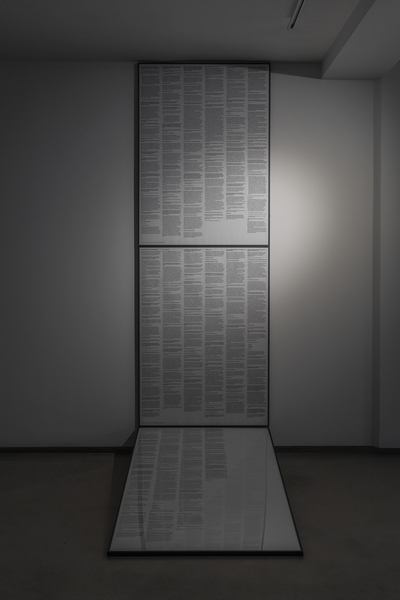
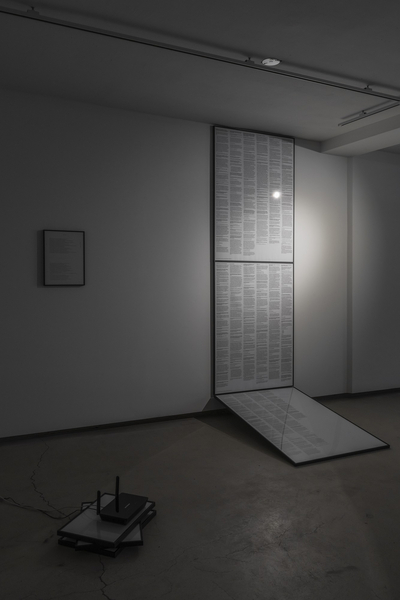
Frequently Asked Questions in the exhibition connected three frames. What was the reason for this, or the intention in relation to the work?
Frequently Asked Questions, which randomly mixes questions and answers about Min Guhong Manufacturing, originally began on a website. In an exhibition, installing a monitor and running a web browser would be the simple and natural choice. But there were already quite a few monitors of different sizes, so I decided to try something different. It was the result of wondering what a website, normally read by scrolling without a fixed page format, would look like if it were instead enclosed in frames with fixed dimensions.
I have heard that you provide technical support through websites for art institutions, cultural projects, fashion brands, and even detective agencies. What collaborations have you done with fashion brands and detective agencies in particular?
In September 2020, while working at Workroom, I made thisisneverthisisneverthat, the fashion brand thisisneverthat’s tenth-anniversary archive book, and a website of the same name. The book and website each recorded and celebrated the brand’s preceding ten years in different ways. The book remains, but the website has disappeared because the server’s operating period ended. That is something like a website’s fate: regrettable, but unavoidable. After more than ten years of making websites large and small, I have gradually grown accustomed to their birth, life, death, and afterlife. A detective agency, meanwhile, contacted me around August 2020, when the detective business was legalized. At first, I thought I would simply make a website introducing the agency, but that turned out to be wrong. I had completely misunderstood. I would like to say more, but our confidentiality agreement makes that difficult.
Your activities cover a wide range. Are there other companies, brands, or celebrities you particularly want to collaborate with? You have already sent Coca-Cola Korea a love letter, Dear Messrs. Coca-Cola Korea.
I occasionally collaborate through websites with institutions, organizations, businesses, and individuals inside and outside art and design, but Min Guhong Manufacturing is not a web design agency. Still, as with Dear Messrs. Young-hae Chang Heavy Industries and Dear Messrs. Coca-Cola Korea, there are endless recipients to whom the company would like to convey respect and affection. Lately, I particularly want to send Dear RM to RM of BTS. I am curious why “Rap Monster” became “RM,” and about the source of his irrepressible, monstrous passion for art. Beyond that, I would like to introduce Min Guhong Manufacturing by leaning on a celebrity’s reputation.
Which work in your portfolio would you choose as an important turning point, and why?
It would have to be About the Company. Thanks to this short text, released in October 2015 as the thirteenth “Audio Visual Pavilion Document” at the exhibition space Audio Visual Pavilion, Min Guhong Manufacturing was established and is now even being introduced in Vogue Korea, which I had only admired from afar. About the Company lists thirty-seven things the company does not do, in Latin and Korean alphabetical order. This was because I did not know what it would be good for the company to do. It also partly came from the belief that what a company does not do matters more than what it ought to do. That remains true today. Min Guhong Manufacturing is on a conveyor belt of considering what the company should not do, and, beyond that, what it might be good to do.
If you were introducing yourself to someone meeting you for the first time, how would you describe yourself? Or what description would you like in an artists’ biographical dictionary in the distant future?
Whether at the schools where I teach or in New Order, I have said above all that “introduction” is problematic. Yet introductions, especially self-introductions, are always difficult and embarrassing. To avoid such situations where possible, I tend to show people my website, FYI Min Guhong is…, before meeting them. As for that dictionary, imagining its publication in the distant future, I think turning it into a website might be a little more enjoyable than being included in it.
On the right side of your website appear Jean Grenier, Cho Sehui’s essay collection The Roots of Silence, novelist Park Mingyu, typographer Ahn Sangsoo, Ahn Graphics, the collected works of Jorge Luis Borges, and poet Park Sangsoon, among others. Can we understand this as a list of your influences?
I could not introduce everything, but they are all precious memories surrounding me.
This exhibition and your previous work sometimes feel like fiction, an invented world. Does this come from studying literature and linguistics? You also seem to value wit and humor. Do you?
Every Friday, I run New Order, which calls itself “liberal arts classes for modern people.” There, I discuss coding as “practical and conceptual writing.” This is not a metaphorical or metonymic statement: coding really is writing. It works with computer languages in a text editor with a blinking cursor, outside the toolbars and icons of graphic software. While working on websites and other coding-based projects, I sometimes feel as if I am writing a poem or novel. In that sense, Min Guhong Manufacturing may be something like the setting of a poem or novel.
Your identity as an editor matters to you, and you have worked at Workroom as an editor, designer, and programmer. What pleasure does editing give you?
I am now a friend of Workroom rather than an employee. Since February 22, 2022, I have been director of Ahn Graphics Lab, commonly abbreviated as AG Lab, an independent division of Ahn Graphics of uncertain identity. At AG Lab, I mainly direct content on the web, yet I still like the title “editor.” It may sound dry at first, but that allows it to encompass many things. In a broad sense, I think editing means giving something a new order, rather than being limited to refining sentences. Every kind of work needs a degree of editorship, too.
What is your view of good editing? In Frequently Asked Questions, you mentioned that you consider editing an act somewhat different from creation, and that editing can be violent.
Is there a book you admire or aspire to as an editor?
I would choose the “Proposals” series edited by Kim Nuiyeon at Workroom Press.
Do you have regular activities or routines that support your creative practice, like working out at the gym every day?
I go to bed early, get up early, and do the day’s work enjoyably, sometimes painfully. If a film or series is popular, I watch it and look at people’s reactions online. Occasionally, I meet friends too. Sometimes this makes me want to bend that framework, and that becomes the force that makes me say something. This is why an uneventful but steady framework—everyday life—matters.
I would like to ask about your tastes: favorite walks, areas of Seoul you often visit, places such as galleries, cafés, and bookshops, and notable art collectives, planners, or curators. What are some recent or longstanding favorites?
I have lived in Yeonnam-dong, Mapo-gu, for nearly ten years, since before the Gyeongui Line Forest Park, now a world-famous destination, existed. My favorite place in Seoul is my home. Since I spend the largest part of each twenty-four-hour day there, it ought to be my favorite. Outside, I like the many paths between home and the Saruga supermarket in Yeonhui-dong. From there, I go up toward the Seodaemun District Office, follow Hongjecheon past the Yeonhui-dong redevelopment area, and pass through Mangwon-dong and Seogyo-dong. By the time I open my front door again, two or three hours have quickly passed.
You are inseparable from the web. In Frequently Asked Questions, you named the “first website,” made by Tim Berners-Lee, as your favorite, saying that it clearly reveals what Min Guhong Manufacturing pursues. Could you elaborate?
The first website, made publicly available in the early 1990s, consists of the browser’s default styling, yet it is unmistakably distinctive and even has an aura. This comes from its elegant, practical content and the thirty-plus years it has maintained its original appearance. It reminds us that many elements can create an aura around something, even without putting much effort into design. In other words, it is a belief in countless possibilities.
What websites do you enjoy visiting? Are there any you consider particularly well designed?
I like practical websites such as Google Maps. Lately, I often talk with ChatGPT. I cannot come up with a suitable answer to “particularly well-designed websites.” Even ChatGPT gives only vague answers when I ask.
A passage in a book you translated is memorable: “Interesting words need boring graphics. Boring words need interesting graphics.” You said you prefer interesting words to interesting graphics. Whose texts inspire you most? Is there a book you return to or have heavily underlined?
That passage is advice from Bob Gill, the American graphic designer and illustrator who left us in 2021. It gives me courage too. Still, it is difficult to identify specific texts or books that inspired me, because it changes with the circumstances. The words of the American historian and philosopher of science Thomas Kuhn seem appropriate here: “The answers you get depend upon the questions you ask.”
Your work sometimes feels like a baffling quiz without answers, or a game of more than twenty questions. Could you offer a helpful explanation of the context you hope people will read? Perhaps this is too grand a question, but is there a consistent message you want to convey through all this work?
I think it is an attitude rather than a particular message. That attitude comes from wanting to introduce Min Guhong Manufacturing in various ways—to place it in someone’s memories. Introduction means making something widely known and connecting it with something else. Is making and exhibiting a work not ultimately a way of introducing something? I believe that if we focus on introduction, a new story will begin somehow. The rest, I am sorry to say, is a trade secret.
Come to think of it, this interview began with the category “media artist.” How do you feel about Min Guhong being called a media artist?
I was asked something similar in another recent interview. As I did then, I would like to answer with my response to a question in yet another interview: “I would rather leave how to define me to the other person. It is fun when they come up with titles I had not thought of, and my attitude toward them changes accordingly. Depending on the person, I may become not only an editor but an artist, teacher, or even husband or lover.” Meanwhile, since “media” simply means mediums, and I too inevitably rely on various mediums such as books and websites, the word seems to fit quite well somewhere near my name. I am less sure about “artist.”
Are you planning any other projects, exhibitions, or publications this year? What are your plans for 2023?
In late 2019, Australian biologists analyzing DNA reported that the human animal’s average natural lifespan was originally thirty-eight years. Astonishingly, I will turn thirty-eight on my approaching birthday, March 5. As a human, I will at least have fulfilled my natural lifespan. Of course, human life expectancy today has more than doubled, but to me, the time after March 5, 2023, may be “biologically” an extra, or a bonus stage. So much so that I would have few regrets even if I suddenly left this world. Under these circumstances, as before, I would rather accept chance and the desires that bloom in between than make specific plans.
Could you name the fashion-related books you worked on as an editor and briefly explain how they came about?
I cannot call myself a diligent consumer, but I am very interested in fashion, as one of our three basic needs: clothing, food, and shelter. Naturally, while working as an editor at Workroom, I planned Heavy Duty and Ametora. Both examine Japanese fashion that influenced fashion today. Heavy Duty is considered a bible of American casual style as it developed in Japan. Ametora traces Japanese fashion before and after heavy-duty style, with it at the center. Please see the following two links, for which I wrote the press releases. (Kim Areum, Ryu Gayoung, Vogue Korea)
Interviewing Min Guhong was like opening a Russian matryoshka doll. Like smaller figures hidden inside a doll, the little website worlds he links to are difficult to leave once entered. To begin finding out who he is, I recommend visiting his 2015 work FYI, Min Guhong is…. For those short on time, the essentials are these: he majored in literature and linguistics at university, worked at Ahn Graphics, then became an editor at Workroom, where he planned projects including the “Practical Series.” He is particularly interested in fashion. At Workroom, he planned Heavy Duty, considered a bible of American casual style as it developed in Japan, and Ametora. Finally, the most important presence in the Min Guhong universe is the one-person company he runs, Min Guhong Manufacturing. A slightly mysterious and serious company, it can suddenly make one chuckle. His work About the Company, which he considers an important turning point in his portfolio, offers a closer look at it. “Manufacturing” originally means producing goods by processing raw materials through human or mechanical power, but in baseball it refers to scoring through means other than base hits, such as stolen bases, advancing runners, and sacrifices. He introduces the company as being “on a conveyor belt of considering what the company should not do, and, beyond that, what it might be good to do.”
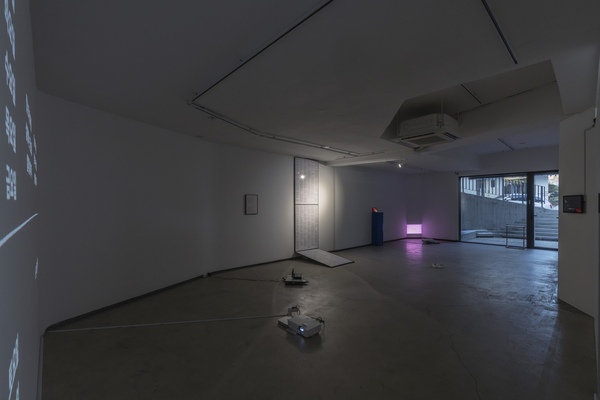
A place where the reality of all this became a little clearer was Primary Practice, a gallery in Buam-dong, Jongno-gu. From December 2022 to February 2023, it hosted Min Guhong Manufacturing’s solo exhibition To Whom It May Concern. Min explains: “As the title suggests, this exhibition is an announcement from Min Guhong Manufacturing to someone who might be interested. Making an exhibition is similar to making a book in that it highlights something, makes it widely known, and connects it to something else. Here, the editor would be the curator. The curator treats the artist as content and steers them this way and that. Having worked as an editor myself, the curator’s own order matters to me.” The resulting exhibition was a world of intriguing readability, giving three-dimensional form to texts and videos from websites. Particularly memorable was Frequently Asked Questions, installed by connecting three fixed frames. Randomly mixing questions the artist had received and his answers, it can also be read on Min Guhong Manufacturing’s official website. He explained that it resulted from “wondering what a website, normally read by scrolling without a fixed page format, would look like if it were instead enclosed in frames with fixed dimensions.”
Min Guhong values his identity as an editor. I asked what pleasure editing gives him. “Since February 22, 2022, I have been director of Ahn Graphics Lab, commonly abbreviated as AG Lab, an independent division of Ahn Graphics of uncertain identity. At AG Lab, I mainly direct content across online and offline settings, yet I still like the title ‘editor.’ It may sound dry at first, but that allows it to encompass many things. In a broad sense, I think editing means giving something a new order, rather than being limited to refining sentences. Every kind of work needs a degree of editorship, too.” Forget All the Rules You Ever Learned About Graphic Design. Including the Ones in This Book., by American graphic designer Bob Gill and translated by Min, contains this passage: “Interesting words need boring graphics. Boring words need interesting graphics.” It is also advice that gives him courage.
Through websites, Min has undertaken varied collaborations with institutions, businesses, brands, and individuals inside and outside art and design. One work reborn in an intriguing form through this exhibition was Dear Messrs. Coca-Cola Korea. It appeared as an outpouring of respect and declarations of love for Coca-Cola above a tower of carefully stacked Pepsi cans. Near the exhibition’s end, people from Coca-Cola Korea reportedly came to visit. I asked if there was anyone he particularly hoped to collaborate with next. “There are endless recipients to whom Min Guhong Manufacturing would like to convey respect and affection. Lately, I particularly want to send Dear RM to RM of BTS. I am curious why ‘Rap Monster’ became ‘RM,’ and about the source of his irrepressible, monstrous passion for art.”
Finally, asked about his plans for 2023, Min sent this witty reply: “In late 2019, Australian biologists analyzing DNA reported that the human animal’s average natural lifespan was originally thirty-eight years. Astonishingly, I will turn thirty-eight on my approaching birthday, March 5. As a human, I will at least have fulfilled my natural lifespan. Of course, human life expectancy today has more than doubled, but to me, the time after March 5, 2023, may be ‘biologically’ an extra, or a bonus stage. So much so that I would have few regrets even if I suddenly left this world. Under these circumstances, as before, I would rather accept chance and the desires that bloom in between than make specific plans.” (Kim Areum, Ryu Gayoung, Vogue Korea)